Multi-Programme Strategy
Most UK travellers concentrate everything into one programme. Every flight credited to BA. Every Avios earned in one account. Every status renewal dependent on one set of thresholds. It is simple — and it works, until the programme changes.
April 2025 proved the risk. BA’s spend-based overhaul roughly doubled the cost of Silver for many travellers overnight. Those who had spread credit across Finnair or Qatar had fallback options. Those who had not were stranded — facing either dramatically higher costs to requalify or losing status entirely.
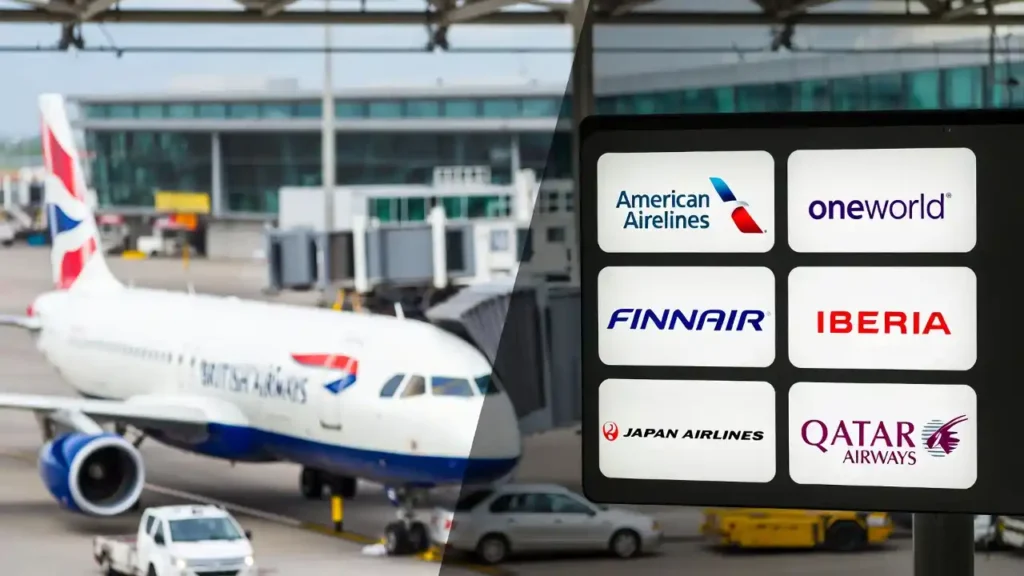
Multi-programme strategy is not about gaming the system. It is about reducing dependence on any single programme’s rules, while using the structural differences between BA, Finnair, Qatar, and Iberia to reach and maintain status more efficiently.
Concentration maximises simplicity. Diversification maximises resilience. The right balance depends on how much you fly, how predictable your travel is, and how much programme risk you are willing to accept. For travellers flying 3+ long-haul trips per year, some level of deliberate spreading almost always outperforms blind concentration.
Why Concentration Became Risky
When everything sits inside one programme, every change hits at once. Threshold increases, earning adjustments, redemption repricing, and route changes all land in the same place. You have no fallback.
The Avios ecosystem now contains four programmes with materially different earning mechanics, status thresholds, and redemption pricing. The same flight — identical seat, identical route — produces different outcomes depending on where it is credited. That structural divergence is the foundation of multi-programme strategy.
| Risk | Single programme | Multi-programme |
|---|---|---|
| Threshold increase | Immediate status loss if cannot meet new target | Switch crediting to programme with unchanged thresholds |
| Earning model change | No alternative — adapt or lose | Redirect flights to programme with favourable model |
| Redemption devaluation | All Avios affected by one programme’s repricing | Move Avios to programme with better rates |
| Travel pattern shift | Status tied to one airline’s network | Credit to whichever programme fits new routes |
The Three Levels of Multi-Programme Strategy
Level 1: Compare before every booking (everyone should do this)
The simplest form requires no splitting at all. Before every long-haul Avios redemption, check BA, Qatar, Finnair, and Iberia for the same flight. Book through whichever offers the lowest total cost (Avios + cash). Transfer Avios at 1:1 as needed. This takes 5–10 minutes and can save £100–400+ per person.
This is not multi-programme strategy in the full sense — you are still earning and holding status in one programme. But it uses the multi-programme ecosystem for spending, which is where most of the value sits.
Level 2: Split crediting for status efficiency (intermediate)
This is where genuine multi-programme strategy begins. Instead of crediting every flight to BA, you credit specific flights to Finnair or Qatar when they produce more status points for the same flying.
The worked example: you fly London–Miami return in Business on BA (sale fare, £1,800). Credited to BA, this earns approximately 1,800 TPs (spend-based, roughly £1 per TP on the base fare after taxes). Credited to Finnair, the same flight earns approximately 22,000 TPs (distance-based, 250% of 4,400 miles each way). The Finnair earning is over ten times higher — from the identical flight.
Two such trips credited to Finnair reach Gold (Sapphire) at 45,000 TPs. The same two trips credited to BA earn roughly 3,600 TPs — less than half of Silver. The status outcome is not just different. It is in a different order of magnitude.
Crediting to Finnair earns Finnair status, not BA status. You get the same oneworld Sapphire benefits (lounges, priority, baggage) but you lose BA-specific perks like the Concorde Room access that BA Gold provides. For most travellers, the alliance benefits are what matter — and those are identical regardless of which programme you qualify through.
Level 3: Deliberate multi-programme architecture (advanced)
The most sophisticated approach assigns different roles to different programmes based on structural strengths:
Status: Finnair
Credit long-haul premium flights to Finnair for distance-based TP earning. Two returns per year maintains Gold (Sapphire). Cost: ~£3,000. Avios-to-TP conversion bridges small gaps. No Finnair flights required.
Earning: BA
Continue earning Avios through BA’s UK infrastructure — Amex transfers, credit card spend, Nectar, shopping portals. BA remains the strongest Avios earning engine for UK residents. Avios transfer out freely at 1:1.
Spending: best programme per trip
Redeem through whichever programme offers the best total cost. Qatar for own flights (no surcharges). Iberia for transatlantic (half the Avios). Finnair for connecting itineraries (zone pricing). BA for short-haul and companion voucher.
This architecture means your status, earning, and spending are optimised independently. A change to any one programme affects only that layer — not the whole strategy.
When Blending Outperforms Concentration
You fly 2–4 long-haul trips per year
Enough travel to reach Sapphire via Finnair but possibly not enough to reach Silver via BA post-2025. Splitting credit to Finnair delivers status that concentration in BA cannot.
You buy discounted premium fares
BA’s spend-based model undervalues sale fares. Finnair’s distance-based model rewards them fully. The same £1,600 Business return earns 22,000 Finnair TPs vs ~1,600 BA TPs. Blending captures the value BA leaves on the table.
You want insurance against programme changes
If Finnair changes its partner earning, you still have Qatar. If Qatar adds restrictions, you still have BA. Spreading credit across programmes means no single change can destroy your status.
When Concentration Still Wins
You fly 1–2 trips per year
Not enough travel to reach status in any programme. Simplicity wins — credit to BA, earn Avios through UK cards, redeem wherever is cheapest. Status is not the goal.
Your BA spend naturally qualifies you
If work travel on BA generates 7,500+ TPs without effort, splitting credit to Finnair gains you nothing — you already have Sapphire. Concentrate for simplicity and BA-specific perks.
You value the companion voucher above all
The voucher only works within BA’s ecosystem. If your primary Avios strategy centres on companion voucher redemptions, BA remains the anchor — though you can still compare programmes for non-voucher trips.
The Practical Implementation
Step 1: Open accounts with BA, Finnair, Qatar, and Iberia. Link them all via Combine My Avios. This is free and takes 15 minutes.
Step 2: Before each flight, check which programme returns the most Tier Points or Avios for that specific route and fare class. Use each programme’s partner earning charts.
Step 3: Credit your long-haul premium flights to Finnair if pursuing Sapphire via the distance-based model. Credit short-haul or high-spend BA flights to BA if pursuing BA status.
Step 4: Before each redemption, compare Avios + cash across all four programmes. Transfer to whichever wins and book immediately.
Step 5: Review annually. If thresholds change, earning models shift, or your travel patterns evolve, adjust which programme holds your status. The system is designed to flex.
Multi-programme strategy is not complexity for its own sake. It is the rational response to an ecosystem where the same flight earns 1,600 TPs in one programme and 22,000 in another. At Level 1 (compare before booking), everyone benefits. At Level 2 (split crediting), travellers flying 2+ long-haul premium trips per year can often reach Sapphire via Finnair for half the cost of BA. At Level 3 (full architecture), status, earning, and spending are each optimised independently — and no single programme change can undermine the whole strategy.