
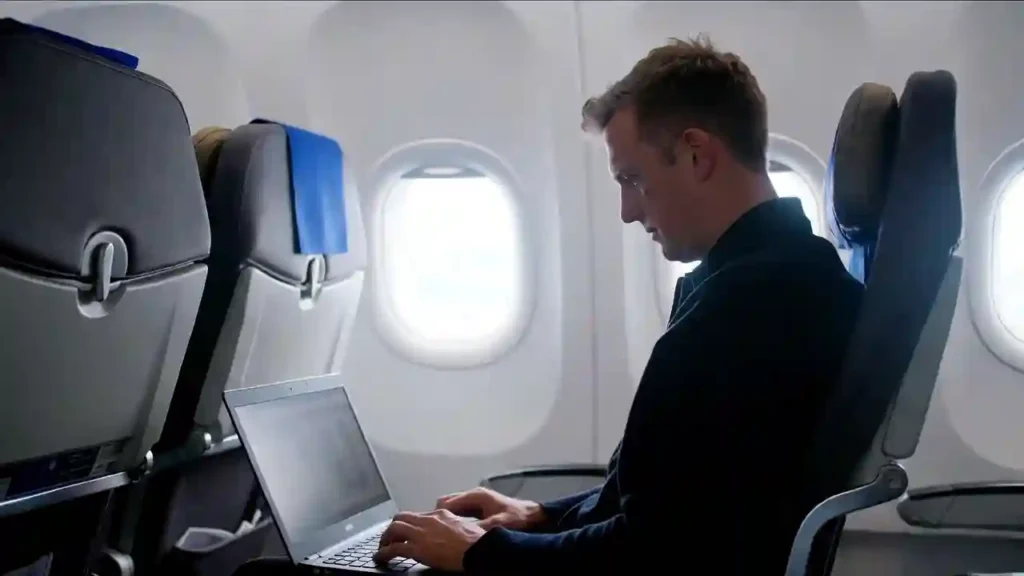
British Airways Starlink Wi-Fi: What It Means for Passengers
On 19 March 2026, British Airways operated its first commercial flight with Starlink Wi-Fi installed — a Boeing 787-8 on flight BA197 from London Heathrow to Houston. It makes BA the first UK airline to fly with Starlink connectivity, and marks the start of a rollout that will eventually cover its entire mainline fleet of more than 300 aircraft. For passengers, the implications go well beyond faster browsing: this is free, gate-to-gate internet with no login, no subscription, and no limit on how many devices you connect. Here is what is changing, which planes are getting it first, and what it actually means when you are in the air.
British Airways has launched Starlink Wi-Fi — free, fast, and available on every device, from the moment you board to the moment you land. The rollout starts with the Boeing 787-8 fleet, which previously had no Wi-Fi at all. The full mainline fleet — including short-haul — will follow within two years. BA Cityflyer is excluded.
What Is Starlink?
Starlink is SpaceX’s satellite internet service, operated by Elon Musk’s aerospace company. Unlike traditional in-flight Wi-Fi, which relies on satellites in high geostationary orbit some 35,000 kilometres above Earth, Starlink uses a constellation of more than 10,000 satellites in low-Earth orbit — much closer to the ground. The practical result is significantly lower latency and faster, more consistent speeds. Download speeds on board can reach 500Mbps or above, which is faster than most home broadband connections and far beyond what passengers have experienced on previous in-flight systems. Streaming video, video calls, and working with cloud-based tools become genuinely usable rather than a frustrating exercise in patience.
Starlink has been rolling out rapidly across global airlines. Qatar Airways has already fitted the system to its 777 fleet. Air France began its rollout in September 2025 on short-haul aircraft. Lufthansa and SAS have also selected the service. In the UK, Virgin Atlantic has announced a Starlink deal, though its rollout is not expected to begin until late 2026.
What This Means for BA Passengers
The most immediate change for passengers is that Starlink on BA is free. No credit card, no loyalty programme membership, no per-device charge. BA’s press release confirms that no special log-in is required — you connect from the moment you board. This is a deliberate part of the Starlink contract: the service provider does not permit airlines to charge passengers for access.
The second major change is gate-to-gate availability. Current in-flight Wi-Fi on BA only activates once the aircraft reaches 10,000 feet and cuts off before landing — leaving a significant dead zone at both ends of the flight. Starlink changes this: connectivity will be live from boarding to disembarkation.
The third change is multi-device support. BA’s current paid Wi-Fi requires passengers to pay separately for each device, or swap a connection between them. With Starlink, all your devices can be connected simultaneously.
For business travellers in particular, this represents a meaningful shift. Real-time video calls, large file transfers, and cloud-based working — all of which were either impossible or deeply frustrating on legacy systems — become straightforward. The first passenger confirmed on the inaugural Starlink flight reported a speed test result of around 200Mbps in Club World, adding that video and voice calls are permitted on board.
Which Aircraft Are Getting Starlink First?
The rollout follows a phased approach, starting with the fleet type that needs it most.
Phase 1 — Boeing 787-8 (now underway): The 787-8 fleet is first in line, and for good reason: none of BA’s twelve 787-8 aircraft had any Wi-Fi at all prior to this rollout. An earlier plan to fit legacy Wi-Fi across the long-haul fleet was abandoned years ago, leaving these aircraft entirely offline. All twelve 787-8s are fitted with Club Suites and fly from Heathrow. The first aircraft — G-ZBJJ, delivered in June 2018 — underwent its retrofit at BA’s Heathrow engineering base between 28 February and 14 March 2026, a process taking approximately two weeks. BA has confirmed the next 787-8 is already being fitted.
The 787-8 fleet operates to a mix of long-haul destinations including Houston, Mumbai, Montreal, Cincinnati, Abu Dhabi, Toronto, Jeddah, and Riyadh. These are not BA’s highest-volume routes — those are served by larger aircraft — but they will be the first places passengers can experience Starlink on BA.
Phase 2 — Boeing 787-9 and Airbus A380: Once the 787-8 fleet is complete, BA will move to other widebody long-haul aircraft. Some 787-9s also currently lack Wi-Fi and will be prioritised. The Airbus A380 is expected to follow — particularly relevant given BA’s planned A380 cabin refurbishment in 2026, which will introduce new First Suite seating and replace older Club World seats with Club Suites. The 777 and A350 have already received regulatory certification for Starlink installation, which positions them as logical candidates for an early phase.
Phase 3 — Short-haul fleet (A320 family): Starlink has been certified for BA’s A319, A320, and A321 aircraft by the UK Civil Aviation Authority. The short-haul fleet will follow the long-haul rollout and will represent a significant competitive differentiator given that BA competes with Ryanair, easyJet, and others on European routes — none of which currently offer comparable connectivity.
| Aircraft Type | Fleet Size (approx) | Wi-Fi Before Starlink | Starlink Phase |
|---|---|---|---|
| Boeing 787-8 | 12 | None | Phase 1 — underway now |
| Boeing 787-9 / 787-10 | 18 / 12 | Partial (some without) | Phase 2 |
| Airbus A380 | 12 | Yes (legacy) | Phase 2 |
| Boeing 777 | ~59 | Yes (legacy) | Phase 2/3 |
| Airbus A350 | ~18 | Yes (legacy) | Phase 2/3 |
| Airbus A320 family | ~160 | No | Phase 3 |
| BA Cityflyer | Various | No | Excluded |
How Long Will the Full Rollout Take?
BA’s official timeline is that the entire mainline fleet of more than 300 aircraft will have Starlink within two years. The airline has already started fitting the second 787-8. Each installation currently takes around two weeks, though BA expects the process to accelerate as its engineering team gains experience. For context, Air France committed to completing its smaller fleet of 227 aircraft within roughly 18 months of starting. BA’s fleet is larger and more varied, making two years a realistic but ambitious target.
For passengers, the practical implication is that whether your specific flight has Starlink will depend on which aircraft is operating it. In the near term, Starlink will only be available on the small number of 787-8s that have been retrofitted. As the rollout progresses, the odds of encountering it will improve — but it will be some time before it is reliably available on the busiest BA routes, which are operated by 777s and A380s.
BA has not yet published a tool to identify which specific aircraft on a given flight has Starlink fitted. In the near term, the best indicator is whether your flight is operated by a 787-8. You can check the aircraft type on your booking confirmation or on BA’s seat map. As the rollout accelerates, BA may introduce a search filter — worth checking ba.com closer to travel.
The IAG Context
The Starlink deal was signed at the level of International Airlines Group (IAG), BA’s parent company, which also owns Aer Lingus, Iberia, Vueling, and LEVEL. In total, over 500 aircraft across the group will eventually be equipped. British Airways and Aer Lingus will offer the service free of charge. The low-cost carriers within the group — Vueling and LEVEL — are expected to treat it as a paid add-on.
The commercial logic is clear. Free high-speed connectivity becomes a meaningful differentiator for BA on transatlantic routes where it competes with United, American, and Delta — all of which are in various stages of their own Starlink or satellite Wi-Fi rollouts. On short-haul, BA’s eventual A320 Starlink capability will be a genuine point of difference against Ryanair, whose chief executive has publicly dismissed the technology.
Summary
British Airways has taken a significant step forward in its onboard experience. The first Starlink flight is in the air, the 787-8 rollout is underway, and the two-year timeline to full fleet coverage is set. For passengers, the headline is simple: free, fast, gate-to-gate Wi-Fi with no device limits and no log-in — on a fleet that, in the case of the 787-8, had no Wi-Fi at all until now. The rollout will take time to reach the busiest routes, but the direction of travel is clear. The era of paying for slow in-flight internet on British Airways is over.




6 Responses
Okay, so I was skeptical at first, but the xo so66.app is actually pretty solid. Easy to use, and I haven’t had any issues with it crashing or anything. Good stuff! Grab it here: xo so66.app
Looking for a B29 gift code guide? Yes, please! Who doesn’t love freebies? I am new here, can anyone help? Check it out here: cách lấy mã giftcode b29
Esporte bet nacional offers a great range of sports and betting options. I appreciate the variety, makes finding good value bets much easier. Give it a spin. esporte bet nacional
Jilikovip is on my radar now. The VIP program looks pretty sweet, and the user interface is easy to get around. Could be a good one for long-term play. Have a look: jilikovip.
Okay, so I was having a bit of trouble signing up and found 56jiliregister. It was surprisingly smooth sailing. Legit felt like they actually made it easy for a change! Check it out if you’re struggling with registration -> 56jiliregister
Yo, anyone else find logging in just a pain sometimes? 5gjililogin saved my bacon today, super simple process. No glitches, no fuss. Def worth a look if you’re tired of login hassles. Trust me on this one! Go see -> 5gjililogin