
The World’s Emptiest Airport Could Become a Gulf Carrier Backup Hub — What It Means for Travellers
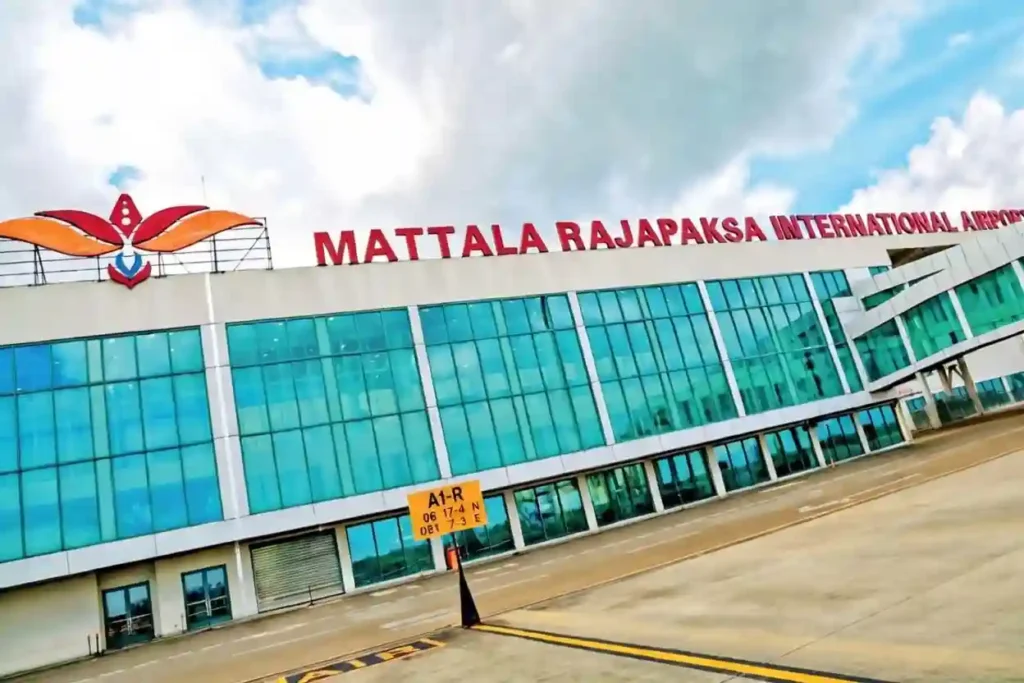
If you have a long-haul flight booked through Dubai or Doha, there is a story worth following. A conflict that erupted in late February 2026 has triggered serious disruption to Middle East airspace, forcing Emirates and Qatar Airways to suspend or significantly reduce operations through their primary hubs. In response, Sri Lanka has put forward an unusual candidate as a contingency solution: Mattala Rajapaksa International Airport, a billion-dollar facility in the country’s south that has spent most of its existence almost entirely empty. The Sri Lankan government has confirmed it has opened preliminary discussions with both airlines, and both carriers have reportedly expressed interest. Here is what is happening, what Mattala actually is, and what the situation means if you are booked on Emirates or Qatar Airways.
Ongoing Middle East airspace disruptions are forcing Emirates and Qatar Airways to consider contingency hub options. Sri Lanka’s largely empty Mattala Rajapaksa Airport has entered preliminary discussions with both carriers as a potential diversion and transit point. No formal agreement has been reached. If you are booked via Dubai or Doha, check your airline’s latest advisories and review your travel insurance position.
What Is Causing the Disruption?
A conflict that began in late February 2026 has caused one of the most significant disruptions to global air travel in recent years. The escalating geopolitical tensions have forced mega-hubs including Dubai, Doha, and Abu Dhabi to suspend or drastically reduce operations at various points, with rerouted flights operating under temporary permissions and carefully sequenced air corridors. The knock-on effect has been severe: Istanbul Airport has seen heavy congestion as displaced traffic reroutes through Turkish airspace, and airlines across the global network have been trimming frequencies, adding unplanned technical stops, and in some cases suspending routes at short notice.
For Emirates and Qatar Airways, the scale of the problem is uniquely acute. Both airlines are built around a single mega-hub model — every connecting passenger in their network flows through Dubai or Doha respectively. When those hubs are constrained, there is no simple fallback in the way a multi-hub airline like Lufthansa Group might redirect traffic through Vienna or Brussels. The search for contingency options has therefore become an operational priority.
What Is Mattala Airport?
Mattala Rajapaksa International Airport (IATA code: HRI) sits in Sri Lanka’s southern Hambantota district, roughly 250 kilometres from Colombo. It opened in 2013 with considerable ambition — built to handle wide-body aircraft including the Airbus A380, with a 3,500-metre runway capable of accommodating the largest commercial jets in service. The airport was designed with a capacity of around one million passengers per year in its initial phase, with longer-term ambitions for expansion.
It has never come close to that figure. Within years of opening, commercial airlines abandoned the airport due to lack of demand, and it earned the label of one of the world’s emptiest international airports — or simply the “ghost airport.” Current operations are minimal: the airport handles some charter and cargo traffic, and has recently seen seasonal service from Russian regional carrier Red Wings. Passenger movements are a fraction of its designed capacity.
The geography, however, is genuinely relevant to the current situation. Mattala sits directly along the primary Indian Ocean east-west aviation corridors — the routes that connect Europe and Africa with Southeast Asia and Australia. Critically, it is positioned well south of the conflict-affected airspace over the Persian Gulf and Arabian Peninsula, offering a stable and secure location for airlines needing to connect those regions. Its runway can handle Emirates’ A380s and Qatar Airways’ A350s and 777s without modification.
What Is Actually Being Proposed?
Sri Lanka’s tourism and aviation officials have confirmed that preliminary discussions are underway with both Emirates and Qatar Airways. Both carriers have reportedly expressed strong interest in repositioning some operations to Mattala. The proposals under discussion include using the airport as a contingency transit hub — a point where long-haul flights can stop, refuel, and exchange passengers when primary Gulf hub operations are constrained — and as a diversion airport for flights unable to continue to Dubai or Doha.
It is important to be precise about what this is and is not. This is not an announcement that Emirates or Qatar Airways will operate scheduled services from Mattala. No formal agreement has been signed. What exists is a government-level proposal, backed by expressions of interest from both airlines, at a time of genuine operational urgency. The Daily Mirror in Sri Lanka, which broke the story, described it as preliminary discussions initiated by the Sri Lankan government.
The Practical Challenges
The case for Mattala on paper is clear: available runway, strategic location, minimal congestion, and the capacity to handle wide-body aircraft. The case against it in practice is equally significant.
The airport has only two gates, with some additional remote stand capacity. Running meaningful transit operations for airlines that typically handle tens of thousands of connecting passengers per day would require infrastructure that simply does not currently exist at Mattala — catering facilities, ground handling at scale, immigration and customs capability for large volumes of transit passengers, maintenance support, and reliable fuel supply. The fuel question is particularly pointed given that the same regional conflict affecting Gulf airspace has also disrupted fuel supply chains across parts of South and Southeast Asia.
There are also no premium lounge facilities, no large-scale baggage handling systems, and none of the passenger experience infrastructure that Emirates and Qatar Airways rely on to deliver their product. As one aviation analyst summarised, turning Mattala into even a temporary version of Dubai or Doha is a far bigger logistical challenge than its available runway length suggests.
The more realistic near-term role for Mattala is as a diversion point and technical stop facility rather than a full connecting hub — a place where wide-body aircraft can land, refuel, and continue, or where flights can divert in an emergency, rather than a replacement for the connecting hub experience passengers expect when booking via Dubai or Doha.
What Does This Mean for Passengers?
If you have flights booked via Dubai on Emirates or via Doha on Qatar Airways, the immediate practical implications depend on your specific route and travel dates. Both airlines are continuing to operate where possible and are working to restore normal scheduling, but the situation remains fluid.
The key steps to take right now are straightforward. Check your airline’s website and app for the latest flight status information — both Emirates and Qatar Airways are updating their disruption advisories regularly. If your itinerary involves a connection through Dubai or Doha, review your connection time: tighter connections are at greater risk if schedules are disrupted. Consider whether your travel insurance covers disruption caused by conflict-related airspace closures — standard policies vary significantly on this point, and it is worth confirming your position before travel.
If Emirates or Qatar Airways do formalise a contingency arrangement at Mattala, passengers whose flights are rerouted through Sri Lanka could face significantly longer journeys and limited onward connection options compared to a normal hub transit. Mattala’s current connectivity to the rest of the world is minimal, meaning it would function as a technical stop rather than a hub with multiple onward options.
If your Emirates or Qatar Airways flight is significantly delayed or rerouted due to the disruption, you may be entitled to additional miles, compensation, or rebooking on alternative routings. Contact the airline directly and keep all documentation of the disruption. For Skywards or Privilege Club members, disruption credits are typically applied automatically but are worth following up if they do not appear within a few days.
The Bigger Picture
The Mattala proposal is a symptom of a deeper structural issue that this disruption has exposed: the global aviation network’s dependence on a small number of mega-hubs. Emirates and Qatar Airways together account for an enormous share of the world’s long-haul connecting traffic, particularly on Europe-to-Asia and Africa-to-Asia routes. Both airlines have built their entire business models around the efficiency of the single hub — a model that is extraordinarily effective under normal conditions but has a significant single point of failure.
For Sri Lanka, the renewed attention on Mattala is a rare economic opportunity in the middle of a crisis. The Middle East disruption has already cut expected tourist arrivals in March by an estimated 20 to 25 percent, representing an immediate revenue loss of around $40 million according to Sri Lankan officials. Hosting transit operations for major international carriers, even on a contingency basis, could partially offset that damage and, if successful, permanently validate an airport that has been an embarrassment to successive governments since it opened.
Whether or not the Mattala discussions lead to a formal arrangement, the episode highlights a question the aviation industry will need to address: in a world where geopolitical risk is increasingly unpredictable, should the Gulf carriers be investing in secondary hub capability as a structural resilience measure rather than scrambling for solutions when their primary hubs are disrupted? That is a longer-term strategic question. For now, the immediate priority for both airlines — and for their passengers — is managing the disruption with the infrastructure that actually exists.