BA Tier Points and Status
What actually changed, whether it is worth it, and how to plan for the new system
Avios get the headlines. Tier Points determine how you actually travel.
From April 2025, British Airways replaced its old distance-based status system with a spend-based one. The programme was renamed from British Airways Executive Club to The British Airways Club, and the way you earn status changed fundamentally. Instead of collecting Tier Points based on how far you fly, you now earn them based on how much you spend.
The core rule is simple: 1 Tier Point for every £1 of eligible spend on BA-marketed flights. But “eligible spend” does not mean the total price on your booking confirmation. It means the base fare plus carrier-imposed surcharges (YQ/YR) only. Government taxes, airport fees and Air Passenger Duty are excluded. On a typical London–New York return, the portion that earns Tier Points can be 30–40% less than the headline ticket price.
The Thresholds
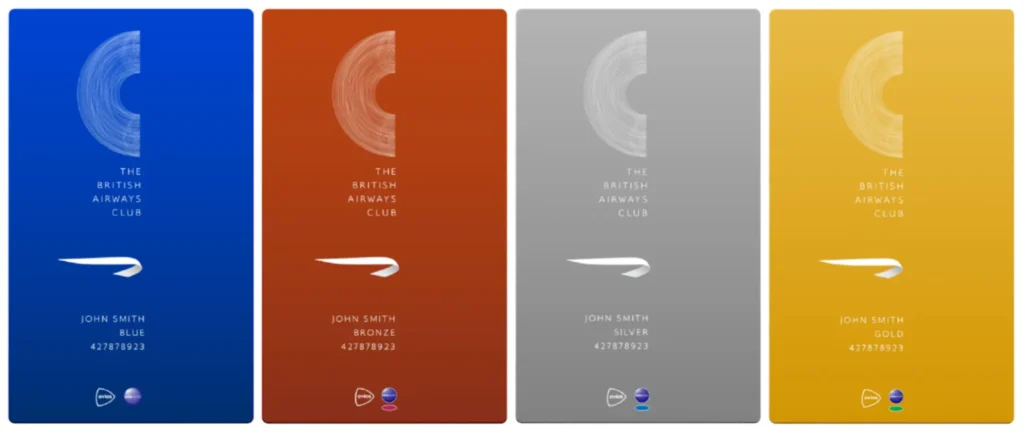
The status tiers remain the same — Bronze, Silver, Gold, and Gold Guest List — but the numbers are calibrated for the spend-based model:
Bronze: 3,500 Tier Points (equivalent to £3,500 qualifying spend).
Silver: 7,500 Tier Points.
Gold: 20,000 Tier Points.
Gold Guest List: 65,000 Tier Points (first year, with at least 52,000 from BA flights/holidays) / 40,000 to renew (with at least 32,000 from BA flights/holidays).
Everyone now runs on a single collection year: 1 April to 31 March. No more personalised anniversary dates. On 1 April, every account resets to zero. Status earned in one year is valid until 30 April of the following year — giving you one month’s grace before it drops. If you do not requalify for Gold, you drop to Silver for a year (soft landing), then to Bronze. Lifetime Gold is available at 550,000 Tier Points.
The thresholds look large, but they are designed for the new maths. £7,500 of qualifying spend across a year — roughly two or three return flights in Premium Economy or one Business Class return plus a couple of short-hauls — is achievable for regular travellers. £20,000 for Gold is a serious commitment that realistically requires Business Class travel or high corporate fares.
The Sectors Pathway
After the initial backlash, BA reintroduced a sectors-based route to status for frequent flyers whose individual ticket prices are low but who fly often. Take 25 BA-coded flights in a collection year and you qualify for Bronze. Take 50 and you qualify for Silver.
This is specifically for BA-coded flights only — Iberia under an IB flight number does not count. There is no sectors pathway to Gold. This route is designed for commuters and high-frequency short-haul flyers who might not reach the spend thresholds but demonstrate loyalty through volume.
Cabin Bonuses: The Permanent Accelerator
This is the part that changed the maths significantly. After the initial backlash to the pure spend-based model, BA introduced cabin bonuses — fixed Tier Points awarded per flight segment on top of your spend-based earning. From 25 November 2025, these became permanent and automatic. No opt-in required.
The bonus amounts per segment (each way):
| Cabin | Bonus per Segment |
|---|---|
| Euro Traveller | 75 |
| Club Europe | 175 |
| World Traveller | 150 |
| World Traveller Plus | 275 |
| Club World | 400 |
| First | 550 |
These stack on top of spend-based earning and make a material difference. A London–New York return in World Traveller Plus costing £1,800 in qualifying spend would earn 1,800 Tier Points from the fare plus 550 from cabin bonuses (275 × 2 segments) — giving you 2,350 Tier Points from a single trip. That is nearly a third of the way to Silver from one holiday.
World Traveller Plus is the sweet spot for status chasers. The cabin bonus of 275 per segment is nearly double World Traveller’s 150, but WTP fares are often only 40–60% more than Economy. The Tier-Point-per-pound efficiency is usually best in Premium Economy.
What Counts — and What Does Not
The price you see at checkout is not the amount that earns Tier Points. Only the airline-controlled portion qualifies.
Does earn Tier Points: base fare, carrier-imposed surcharges (YQ/YR), seat selection, extra baggage, cash cabin upgrades purchased through BA, BA Holidays package spend, and contributions to Sustainable Aviation Fuel (up to £1,000).
Does not earn Tier Points: government taxes, airport fees, Air Passenger Duty, reward flights booked with Avios, upgrades using Avios, and Economy Basic fares (the cheapest hand-baggage-only tickets).
That last point catches people out. Basic Economy fares earn zero Tier Points and zero cabin bonuses. If status matters to you, the cheapest fare is a false economy.
Always check the fare breakdown before booking. The “Flight Summary” page before payment and your e-ticket receipt both show the split between eligible spend and taxes. On a £387 Economy ticket to New York, only around £189 may qualify as eligible spend. On a £11,990 fully flexible Club World ticket to the same destination, virtually all spend (£11,687) qualifies. The system rewards higher fares disproportionately.
BA Holidays: Powerful but Misunderstood
BA Holidays packages earn 1 Tier Point per £1 on the entire package price — flights, hotel, car hire, everything. There is no cap. This is genuinely attractive and can be a fast route to status, but there is a critical detail most people miss.
Tier Points are split equally between all passengers on the booking, including children.
A £20,000 family holiday for two adults and two children does not give one person 20,000 Tier Points. It gives each of the four travellers 5,000. That is not enough for any single person to reach Silver (7,500). Any passenger without a BA Club membership number simply forfeits their share — the points are not redistributed to the lead booker.
This means BA Holidays works best as a status accelerator for one or two travellers. A £5,000 flight-and-hotel package for a couple earns 2,500 Tier Points each — useful. The same £5,000 split across a family of four earns 1,250 each — not enough to move the needle.
Avios Earning Rates by Tier
Your status tier also affects how many Avios you earn per £1 spent on BA, American Airlines and Iberia flights:
Blue: 6 Avios per £1
Bronze: 7 Avios per £1
Silver: 8 Avios per £1
Gold: 9 Avios per £1
The differences are modest — but over a year of regular flying they compound. A Gold member spending £10,000 on flights earns 90,000 Avios versus 60,000 for a Blue member. That is an extra 30,000 Avios — enough for a short-haul return — simply from having status.
Milestone Bonuses
BA has introduced milestone bonuses between tiers — bonus Avios awarded at specific Tier Point thresholds as you progress through Bronze and Silver. The current bonuses are 2,500, 4,000 and 5,000 Avios at milestones within Bronze and Silver. These are modest — at a 1p per Avios valuation, they represent less than 0.5% of the spend required to reach them — but they are automatic and require no action.
Earning Tier Points from Your Credit Card
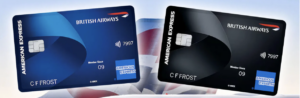
The BA American Express Premium Plus card offered up to 2,500 Tier Points per year through everyday card spending in its initial promotion, which ran until 1 February 2026. All Premium Plus holders also received 500 bonus Tier Points as a launch gift.
As of March 2026, BA has stated that details of how Premium Plus cardholders can earn Tier Points in 2026 are “coming soon.” The expectation is that a similar offer will return — it is too valuable a retention tool for BA to abandon — but the specific terms have not been announced. Check ba.com for the latest.
When available, credit card Tier Points are powerful gap-closers. 2,500 Tier Points will not get you status on their own, but combined with flying they can bridge the difference. If you are sitting at 5,000 Tier Points from travel and need 7,500 for Silver, the credit card can close that gap without an extra trip.
Partner Airlines: Less Generous Than Before
Under the old system, partner airline flights earned Tier Points based on distance and cabin — which meant cheap Business Class fares on oneworld partners could be an efficient route to status. That lever has narrowed significantly.
For most partner airlines, earning is now based on a percentage of miles flown rather than direct revenue. The rates vary enormously. Qatar Airways is relatively generous — around 25% of miles flown in discounted Business Class. Malaysia Airlines is much less so — as low as 2% in discounted Economy.
The message from BA is clear: fly on our metal, earn the most. Partner flights still contribute, but they are no longer the optimisation shortcut they used to be. If you are choosing between a BA-marketed flight and a partner-operated one at similar prices, BA will almost always earn more Tier Points.
The best remaining partner sweet spots are Finnair, Japan Airlines and Qatar Airways, which offer more generous Tier Point earning than most. If you are flying to Helsinki, Tokyo or Doha, check whether the partner rate beats the BA-marketed option. For anyone considering alternatives entirely, Iberia Plus can be more generous for Business Class — flat rates of 1,250 Tier Points per sector on flights over 3,000 miles.
What Each Tier Actually Gets You
Bronze (oneworld Ruby): Free seat selection 7 days before departure. Modest, but it signals you are in the system.
Silver (oneworld Sapphire): Business Class lounge access on BA and oneworld airlines. Priority boarding. Two checked bags at 32kg each for you and everyone on your booking. Better handling during disruption. This is the tier that changes day-to-day travel most noticeably — lounge access alone saves money and stress on every trip.
Gold (oneworld Emerald): First Class lounge access (including the Galleries First lounge at Heathrow). Higher priority for operational upgrades. oneworld Emerald benefits across all alliance airlines. Meaningful if you fly frequently, but £20,000 of qualifying spend is a serious financial commitment.
Gold Guest List: Concorde Room access at Heathrow. Ability to gift Gold or Silver status to one person. Can force open reward availability for 5 seats, twice per year. The ultimate tier, but requiring 65,000 Tier Points (£65,000+ of qualifying spend) makes it realistic only for very frequent premium travellers.
Who Benefits, Who Doesn’t
The new system works well for: Corporate travellers booking premium fares (status follows naturally from existing travel). Premium leisure travellers — one or two Business Class trips plus cabin bonuses can reach Silver comfortably. Solo or couple BA Holidays customers (uncapped package earning, not diluted across large groups). Regular long-haul flyers on BA routes — two or three returns in WTP with bonuses can reach Silver.
The new system is harder for: Economy-heavy travellers (lower fares earn fewer points, only 150 bonus per long-haul segment, 75 for short-haul). Families booking shared holidays (TP split across all passengers dilutes per-person earning). Mileage runners (the old tactic of booking cheap flights to distant airports no longer works — distance does not earn, spend does). Partner-heavy flyers (if most flying is on oneworld partners rather than BA-marketed flights, earning rates are lower and less predictable).
A Practical Status Plan for Silver
If you are aiming for Silver (7,500 Tier Points) in a single April–March year, here is what a realistic path looks like for a UK leisure traveller:
One long-haul return in World Traveller Plus (e.g. London–New York, ~£1,800 qualifying spend): approximately 2,350 Tier Points (1,800 from spend + 550 from cabin bonuses).
One BA Holidays package for two (e.g. European city break at £2,500 total): approximately 1,250 Tier Points per person.
Two short-haul returns in Euro Traveller (e.g. London–Barcelona, ~£300 qualifying spend each): approximately 450 Tier Points each (300 from spend + 150 from cabin bonuses).
BA Amex Premium Plus card spending: up to 2,500 Tier Points over the year (when the offer is active).
Total: roughly 7,000 Tier Points — within touching distance of Silver, from travel that many households do naturally. The credit card spending closes the gap.
Start with your annual travel budget, not your routing strategy. Map out the trips you are likely to take, calculate the Tier Points they would generate including cabin bonuses and credit card earning, and see where you land. If Silver is within reach from travel you would do anyway, lean into it. If it requires extra flights you would not otherwise book, it is probably not worth forcing. The moment you start booking flights specifically to chase a threshold, you have turned a benefit into a cost.
BA Tier Points now reward spend and loyalty, not distance and frequency. Status is still valuable — Silver especially — but the path has shifted. Cabin bonuses, BA Holidays earning, credit card Tier Points and the sectors pathway all provide routes in. The strongest strategies treat status as something that emerges from well-planned travel, not something you chase at any cost. Check the maths before the final push — sometimes the lounge day pass is cheaper than the extra flight.