Shopping Portals: Earning Points from Everyday Purchases
Shopping portals add a second earning layer on top of credit card rewards. Start your online purchase through an airline or hotel portal instead of going directly to the retailer, pay as normal with your usual card, and earn bonus points for the referral. Nothing about the price, the product or the checkout process changes. The only shift is where your purchase journey begins.
For UK points collectors, two portals matter most: BA Shopping (shopping.ba.com) for Avios, and Virgin Atlantic Shops Away (shopsaway.virginatlantic.com) for Virgin Points. Between them, they cover hundreds of retailers across every category — fashion, electronics, insurance, hotels, groceries and more. Alongside these sit cashback portals like TopCashback and Quidco, which can sometimes offer better value than the airline portals and produce cash you can redirect toward taxes, surcharges and Air Passenger Duty on reward flights.
Shopping portals do not change what you spend. They change where your purchase journey starts. That single behavioural shift creates an additional earning stream that runs alongside flights and credit cards, continuously, on purchases you were making anyway.
BA Shopping (shopping.ba.com)
BA Shopping is the Avios portal, accessible through shopping.ba.com. You log in with your BA Executive Club credentials, browse or search for a retailer, click through, and complete your purchase on the retailer’s own website. Avios are credited to your Executive Club account, typically within 35 days for standard retail purchases and 90–120 days for hotel bookings.
The portal lists thousands of retailers across 16 categories. Earning rates vary by retailer and fluctuate over time — the same store might offer 3 Avios per £1 one month and 6 the next. Rates are clearly displayed on each retailer’s page before you click through, including any exclusions for specific product categories or new versus returning customers.
Major Retailers on BA Shopping
The following are among the most commonly used retailers on the portal, with typical earning rates (these fluctuate — always check the current rate before purchasing):
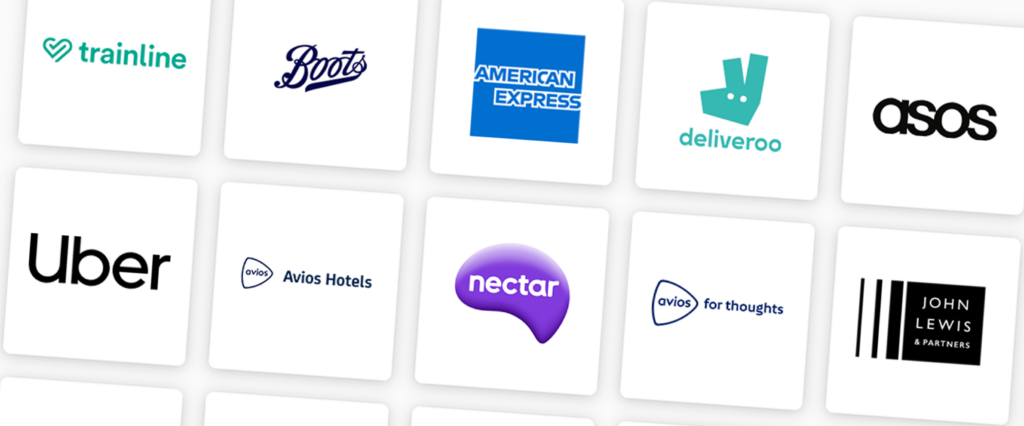
Fashion and Department Stores: John Lewis (typically 2–3 Avios/£1), M&S (2–3 Avios/£1), ASOS (3–6 Avios/£1), Selfridges (3–5 Avios/£1), Harvey Nichols (up to 14 Avios/£1 during promotions), Reiss, Boohoo, Nike, Adidas, and most major high street brands.
Electronics and Technology: Apple (3–12 Avios/£1 depending on timing, but newly released products are always excluded), Dell, Currys, Samsung, and Dyson.
Travel and Hotels: Booking.com (up to 6 Avios/£1), Hotels.com, Marriott, IHG, Accor, Hilton (though hotel tracking is notoriously unreliable — more on this below). Also Heathrow parking providers, car hire companies and travel insurance.
Insurance and Finance: MoneySuperMarket, Confused.com, uSwitch, GoCompare, CompareTheMarket, and most major insurance aggregators. Renewals for car insurance, home insurance and breakdown cover can generate meaningful Avios on purchases you are making annually regardless.
Groceries and Household: Sainsbury’s (desktop only — mobile does not track), Waitrose, and various food delivery services. Also Uber (modest rate but tracks well for regular users).
The highest-value portal purchases are those you were making anyway at full price: annual insurance renewals, planned electronics, hotel bookings for upcoming trips. These generate the largest single Avios deposits. A £1,500 laptop through Apple at 6 Avios/£1 produces 9,000 Avios from a single transaction.
BA Shopping Promotions
Rates spike during peak retail periods. Black Friday, Christmas, January sales and seasonal campaigns regularly push earning rates to 2–3 times normal levels. BA Shopping also runs periodic bonus events where multiple retailers increase simultaneously. During these windows, purchases that would normally earn 3 Avios/£1 might earn 8–12 Avios/£1. For larger planned purchases — appliances, electronics, furniture — timing around these promotions can meaningfully change the Avios outcome.
The Avios Hotels portal (a related but separate product) offers 10 Avios per £1 on hotel bookings and is worth checking when booking accommodation outside of loyalty programme direct rates.
Virgin Atlantic Shops Away
Shops Away (shopsaway.virginatlantic.com) is Virgin Atlantic’s shopping portal for earning Virgin Points. The structure is identical to BA Shopping: log in with your Flying Club credentials, click through to the retailer, and purchase as normal. Shops Away covers hundreds of UK retailers with points credited to your Flying Club account.
Shops Away tends to run fewer promotional bonus events than BA Shopping, but its standard earning rates are sometimes higher for specific retailers. The portal covers similar categories — fashion, electronics, travel, insurance — and includes many of the same merchants. For households building Virgin Points alongside or instead of Avios, Shops Away is the equivalent earning tool.
The decision between BA Shopping and Shops Away for any given purchase should be straightforward: use whichever feeds the programme you are currently building toward. If you are 10,000 Avios short of a BA redemption, route through BA Shopping. If you are accumulating Virgin Points for an Upper Class booking, use Shops Away. Chasing marginal rate differences between portals for small purchases is not worth the mental overhead — pick the programme, stick with it, and let the habit compound.
Cashback Portals: TopCashback and Quidco
Cashback portals operate identically to airline shopping portals — click through, purchase, earn — but they pay cash rather than points. TopCashback and Quidco are the two dominant UK platforms, covering thousands of retailers with percentage-based cashback on every purchase.
The strategic question is whether cashback or airline points represent better value for a given transaction. The answer depends on two things: the relative rates offered, and what you value a point at.
When Cashback Beats the Airline Portal
Cashback rates are frequently higher than the equivalent airline portal rate, sometimes significantly so. If BA Shopping offers 3 Avios/£1 on a retailer and TopCashback offers 8% cashback on the same store, the cashback is clearly better even if you value Avios at 1p each (3% equivalent versus 8%). This arithmetic plays out across many retailers, particularly for travel bookings, hotel aggregators, insurance and financial products.
TopCashback ended its direct Avios conversion partnership at the end of 2023, so you can no longer transfer cashback earnings directly into Avios. However, the cash itself remains valuable within a points travel strategy. Cash from portals can be directed toward the costs that Avios and Virgin Points do not cover: Air Passenger Duty, carrier surcharges, airport taxes, and the fees and charges that accompany every reward booking. A household generating £300–500 per year in cashback from TopCashback can effectively offset the cash cost of two or three reward flights.
Always compare rates before clicking through. A quick check across BA Shopping, Shops Away, TopCashback and Quidco takes thirty seconds and can reveal substantial differences. For a £500 purchase, the gap between 3% (portal) and 10% (cashback) is the difference between 1,500 Avios and £50 in cash — the cash is almost certainly more useful if you are already earning Avios steadily from credit cards.
Cashback for Taxes and Surcharges
This is the under-appreciated role of cashback portals in a points strategy. Every Avios reward flight carries cash costs — Air Passenger Duty, carrier-imposed surcharges on BA long-haul, airport taxes. A Business Class return to New York on Avios might cost 176,000 Avios with a Companion Voucher, but the cash element can be £600–800 per person. Cashback earnings from portals, accumulated over a year of normal online shopping, can materially reduce or eliminate these cash outlays.
Think of cashback portals as the tool that covers the cash side of reward travel, while credit cards and airline portals handle the points side. Both contribute to the same outcome: reducing the total cost of your trip.
Stacking: How Portals Combine with Credit Cards
The power of shopping portals becomes clear when you stack them with credit card rewards. A single purchase can generate points from three separate sources simultaneously:
Layer 1 — Portal points: Avios, Virgin Points, or cashback earned through the portal’s referral mechanism.
Layer 2 — Credit card points: Avios, Membership Rewards, or Virgin Points earned from the payment card used to complete the purchase.
Layer 3 — Retailer loyalty: Nectar points at Sainsbury’s, Boots Advantage Card points, hotel loyalty points if booking directly with a chain, or any other retailer scheme attached at checkout.
These layers do not compete — they stack. A purchase at John Lewis through BA Shopping, paid with a BA Amex Premium Plus, earns Avios from the portal and 1.5 Avios/£1 from the credit card. A hotel booked through the BA Shopping portal with an Avios-earning card, while also earning hotel loyalty points from the chain, produces three separate reward streams from one transaction.
Stacking is about sequence, not complexity. Start at the portal, pay with the right card, and let each layer do its job. The total return on a single purchase can reach 5–15% in combined points and cashback value — far above what any single channel delivers alone.
Example: Insurance Renewal
You need to renew car insurance at £600/year. Check BA Shopping: the insurance aggregator offers 2 Avios/£1 (1,200 Avios). Check TopCashback: the same aggregator offers £35 cashback. The cashback is worth more. You click through TopCashback, pay with your BA Amex Premium Plus (earning 900 Avios at 1.5/£1), and receive £35 cashback in your TopCashback account. Total: 900 Avios plus £35 cash, from a purchase you were making regardless.
Example: Electronics Purchase
A £1,200 laptop from Apple during a BA Shopping bonus event at 6 Avios/£1. You click through BA Shopping (7,200 Avios from the portal), pay with your Barclaycard Avios Plus (1,800 Avios at 1.5/£1). Total: 9,000 Avios from a single purchase. At promotional rates of 10–12 Avios/£1, the portal contribution alone could exceed 12,000 Avios.
Tracking: The Imperfect Reality
Shopping portals rely on browser cookies to track your purchase and attribute it to your loyalty account. This means tracking is inherently imperfect. Most transactions post correctly, but delays, failures and retrospective clawbacks do occur. This is the single most important thing to understand about portals: they are a bonus, not a guarantee.
How to Maximise Tracking Success
Experienced portal users follow a consistent process that significantly improves tracking reliability. The principle is simple: give the tracking cookie a clean path from portal to purchase with nothing interfering.
Use a clean browser session — ideally a private/incognito window with all cookies cleared. Accept all cookies when the portal and retailer sites prompt you. Click through to the retailer from the portal and complete the entire purchase in a single browser tab without navigating away. Do not open other tabs, do not apply external discount codes, and do not log into the retailer’s site until the checkout stage. If the retailer has a mobile app, ensure the portal link opens the website rather than the app — app redirects frequently break tracking. Some retailers (Sainsbury’s, for example) only track on desktop, not mobile.
Research what you want to buy before visiting the portal. Know the product code or SKU. Then open your clean browser session, go to the portal, click through, search for the item by code, and purchase. This minimises browsing time and reduces the risk of the tracking cookie expiring or being overwritten.
What Can Go Wrong
Ad blockers, VPNs, privacy browser extensions and corporate network filtering can all interfere with tracking cookies. If you use any of these, disable them for the portal session or use a separate browser without them installed. Applying discount or voucher codes not sourced from the portal itself may void the transaction. Returns, cancellations and partial refunds can result in clawbacks — sometimes months after the original purchase posted.
Hotel bookings through portals are particularly unreliable. Hilton and certain other chains are widely reported to have poor tracking rates, with points sometimes posting months late or not at all. Hotel bookings can also trigger clawbacks long after the stay. For hotel-specific earning, dedicated platforms like Rocketmiles may be more reliable, though you should weigh this against the rates available.
Never make a purchasing decision based on portal points alone. The points are upside on a purchase you were already making at a price you were already happy with. If a different retailer offers the same product cheaper without a portal, buy from the cheaper retailer. Financial sense comes first. Portal points come second. Always.
Keeping Records
After clicking through, check your portal account — BA Shopping shows a tracking entry in your history almost immediately, which you can verify on another device. Take a screenshot of this tracking confirmation. Keep order confirmation emails. If points do not appear within the stated timeframe (35 days for retail, 90–120 days for hotels), submit a missing points claim with your evidence. BA Shopping provides a claims process, though outcomes are not guaranteed. TopCashback generally has a more reliable claims process than the airline portals.
Which Portal to Use: A Decision Framework
Before every online purchase worth more than a few pounds, run a quick mental checklist:
Step 1: Am I actively building toward a specific Avios or Virgin Points redemption? If yes, use BA Shopping or Shops Away respectively to feed that balance directly.
Step 2: What rate does the airline portal offer for this retailer? Check the current rate — it may have changed since your last purchase.
Step 3: What rate does TopCashback or Quidco offer? If cashback clearly exceeds the value of the portal points (valuing Avios at roughly 1p each), take the cashback and redirect it toward taxes and surcharges.
Step 4: Am I paying with my highest-earning credit card for this merchant category? The card layer stacks regardless of which portal you use.
For small everyday purchases, do not overthink this. Pick one portal as your default (usually BA Shopping if you are an Avios collector) and use it habitually. Save the comparison work for larger purchases — electronics, insurance, travel, furniture — where the rate difference produces a meaningful amount.
What Portal Earning Actually Looks Like
Individual portal transactions feel small. A few hundred Avios here, a thousand there. But portal earning is cumulative, and for households that route most online spending through a portal, it adds up. A household spending £8,000–12,000 per year online (across all categories — groceries, clothing, insurance, electronics, gifts, subscriptions) might generate 15,000–30,000 additional Avios or equivalent cashback value annually, depending on retailer mix and whether promotional periods are exploited.
That is not enough for a premium cabin long-haul redemption on its own. But it is enough to tip a balance from “not quite enough” to “bookable” several months earlier than credit card earning alone would deliver. It covers a short-haul return, or meaningfully reduces the Avios gap on a larger booking. And it does this without any additional spending — purely from changing where you start your purchase.
Shopping portals are the lowest-effort earning tool in UK points travel. BA Shopping earns Avios, Shops Away earns Virgin Points, and cashback portals like TopCashback produce cash for taxes and surcharges. They stack with credit card rewards and retailer loyalty. Tracking is imperfect, so treat portal points as upside rather than certainty — and never let portal earnings drive a purchasing decision. Route purchases through the portal that feeds your current travel goal, compare rates for larger transactions, and let the habit compound quietly alongside your card strategy.