How the British Airways Club Actually Works
The structure behind Avios, Tier Points and reward flights — and why most people misunderstand it
The British Airways Club is often treated as a simple points account. Collect Avios, spend them on flights, repeat. In reality, it is a structured travel system built around several moving parts that operate together — and confusing those parts is where most frustration with the programme begins.
At its core, the Club does two different jobs. It helps reduce the cost of travel, and it improves how travel feels. Those outcomes are driven by different mechanisms. Avios act as a flexible reward currency, earned from flights, credit cards and partners, then spent on reward flights and upgrades. Tier Points sit alongside them as a completely separate system — they do not reduce prices or convert into Avios. Instead, they determine recognition: priority handling, lounge access and smoother journeys when you fly.
Around these two systems sit partner airlines across the oneworld alliance, UK credit card vouchers, a shared Avios currency that moves freely between programmes, household pooling, and a reward seat system with its own availability mechanics. Together, they form the operating logic of the programme.
The British Airways Club is not just a place where Avios sit. It is the framework that controls how Avios are earned, how flights become bookable, and how travellers are treated once they fly. Once you understand how these pieces fit together, the programme stops feeling unpredictable. Decisions become clearer. Redemptions become easier to plan. And the Club starts functioning as a travel tool, rather than a loyalty scheme you occasionally interact with.
Two Systems Running in Parallel: Avios and Tier Points
The British Airways Club becomes much easier to navigate once you recognise that two separate systems operate at the same time. They interact, but they serve different purposes — and mixing them up is the single most common source of confusion in the programme.
The first system is Avios. This is the reward currency. It is earned from flights, credit cards and a wide network of partners, and it is spent to reduce the cost of travel through reward flights and upgrades across multiple airlines. Avios is what gets you from London to New York for a fraction of the cash price.
The second system is Tier Points. These are not spendable. They do not convert into Avios. They cannot be used for bookings. Instead, they determine your status within the programme — how you are treated when you travel, not how much your flights cost. Status means lounge access, priority boarding, better disruption handling and recognition across BA and the wider oneworld alliance.
Many frustrations with the programme come from mixing these two ideas. Travellers chase Tier Points when what they really want is a cheap flight. Others collect Avios without understanding how availability or routing affects what those points can actually book. The systems serve different goals and require different strategies.
Avios change what travel costs. Tier Points change how travel feels. They work best when treated as separate tools. It is entirely normal for the two to move in different directions. You can build a large Avios balance from cards and partners while holding no status at all. Equally, frequent flying can produce strong status without a meaningful Avios balance if points have recently been redeemed.
How Many Avios Do You Earn When Flying?
You earn Avios whenever you fly with British Airways and its partner airlines, although how much you receive depends on the airline, your Club tier and what you spend on your ticket.
BA, American Airlines and Iberia Flights (Spend-Based)
On British Airways and American Airlines flights, Avios are earned based on how much you spend. The rate depends on your Club tier:
Blue (entry level): 6 Avios per £1 of eligible spend. Bronze: 7 Avios per £1. Silver: 8 Avios per £1. Gold: 9 Avios per £1.
For Iberia flights credited to BA, the rates are one Avios lower per tier — 5 per £1 for Blue, rising to 8 per £1 for Gold.
Eligible spend includes the base fare, carrier-imposed surcharges, paid seat selection, additional baggage and cabin upgrades. It excludes government taxes and airport charges. On a typical economy ticket, the eligible portion is often only 30–50% of the total price — the rest is tax and airport charges. On a premium cabin ticket, the proportion of eligible spend is much higher because the base fare dominates.
Partner Airline Flights (Distance-Based)
Flights on other oneworld airlines and non-IAG partners usually earn Avios based on distance flown and booking class rather than spend. Discount Economy tickets may earn as little as 25% of the miles flown, while flexible Economy, Premium Economy and Business Class fares earn substantially more — some premium fares earn 100% or more of the distance. The exact rates vary by airline, cabin and fare class, and BA publishes partner earning tables on its website.
Where to Credit Your Flights
You do not have to credit a flight to the airline you are flying with. A Qatar Airways, Cathay Pacific, Japan Airlines, Finnair or Malaysia Airlines flight can be credited to the British Airways Club instead of the operating carrier’s own programme. Because Avios can be moved freely between programmes (covered below), most UK collectors simply credit all eligible flights to BA for simplicity and — crucially — to accumulate Tier Points in one place.
For most UK collectors, flights are not the primary source of Avios. Credit cards, shopping portals and partner activity typically generate more Avios per year than flying — particularly for leisure travellers who fly only a few times annually. The flight earning rates matter most for frequent flyers who are also chasing status. For everyone else, the card and partner ecosystems are where the real accumulation happens.
Avios Beyond BA: A Shared Currency That Moves Freely
One of the most important and underappreciated features of the British Airways Club is that Avios is not just a BA currency. It is shared across several airline programmes, and balances can be moved freely, instantly and at no cost between them.
Avios can be transferred between British Airways, Iberia Plus, Aer Lingus AerClub, Qatar Airways Privilege Club and Vueling Club, once accounts are linked. This means points earned in any of these programmes are effectively interchangeable. A Qatar Airways Privilege Club balance can be moved to BA in seconds. Iberia Avios can be shifted to Aer Lingus for a specific booking. The flexibility is substantial.
This matters on both sides of the equation. On the earning side, any partner of any Avios programme feeds into your overall balance. The Accor-Qatar double-dip partnership, for example, deposits Avios into your Qatar Privilege Club account — from where they transfer to BA instantly. On the spending side, you can book through whichever Avios programme offers the best pricing or availability for a specific route. Iberia often prices intra-European flights differently from BA. Qatar sometimes opens partner availability that BA does not show. Aer Lingus offers transatlantic routes from Ireland at competitive Avios pricing.
Linking accounts takes minutes through each airline’s website. Once linked, transfers are immediate and unlimited. There is no fee and no minimum transfer amount.
Avios Expiry
Avios do not expire as long as you earn, spend or buy at least once every 36 months. Any activity counts — a single credit card transaction that generates Avios, a Nectar conversion, or even buying one Avios resets the clock for your entire balance. In practice, anyone actively collecting through cards or partners will never face expiry.
Household Accounts: Pooling Avios Across a Family
British Airways allows up to six people living at the same address to link their accounts into a Household Account. Once linked, Avios can be pooled for bookings — any member of the household can contribute points toward a single redemption.
This is particularly useful for families where multiple members earn Avios from different sources. One person might hold a BA Amex, another a Barclaycard, a third converts Nectar points. Individually, none may hold enough for a premium cabin redemption. Household pooling eliminates the need to transfer points between members — the combined balance is available at the point of booking.
The main restrictions are practical. All members must share the same registered address, and there are limits on how frequently you can change household membership. Once set up, the mechanism works quietly in the background. Points remain in each individual’s account until booking, at which point the system draws from across the household as needed.
Status: The Tier Point System
British Airways overhauled its status system in April 2025, moving from a distance-and-class model to a spend-based one. The programme was rebranded from the Executive Club to “The British Airways Club”, and the mechanics of earning Tier Points changed significantly.
How Tier Points Are Now Earned
On BA-marketed flights, Tier Points are earned at 1 Tier Point per £1 of eligible spend — the same definition of eligible spend used for Avios (base fare, carrier surcharges, seat selection, baggage, upgrades; excluding government taxes and airport charges).
On partner airline flights, Tier Points are still earned based on distance flown and fare class, just as they were before the overhaul. The partner earning tables are published on ba.com. Some partners are particularly generous — Qatar Airways, Japan Airlines and Finnair are notable for awarding strong Tier Point returns on premium cabin flights.
BA also introduced automatic bonus Tier Points from November 2025, awarding extra points on every eligible flight based on cabin class — up to 550 bonus Tier Points per flight in First Class, with lower amounts for Club World, Premium Economy and Economy. These bonuses require no registration and apply automatically, effectively softening the spend-based thresholds.
Status Thresholds
The four tiers require the following Tier Points within a single collection year (1 April to 31 March):
Bronze — 3,500 Tier Points (or 25 BA-coded flights). Equivalent to oneworld Ruby. Unlocks priority check-in and boarding, free seat selection seven days before departure, and a small Avios earning boost on BA flights.
Silver — 7,500 Tier Points (or 50 BA-coded flights). Equivalent to oneworld Sapphire. This is where the programme becomes genuinely valuable: business-class lounge access across oneworld when flying eligible itineraries (with one guest), extra baggage allowance, business-class check-in and priority security where available. Silver is widely considered the sweet spot of the programme — it delivers the core benefits of elite status without requiring the enormous spend needed for Gold.
Gold — 20,000 Tier Points. Equivalent to oneworld Emerald. First-class check-in and lounge access across oneworld, highest priority for upgrades and disruption handling, Gold Priority Rewards (the ability to force reward seats by paying double Avios, booking more than 30 days in advance). Earning Gold requires roughly £20,000 of eligible flight spend in a single year — effectively limited to frequent business travellers or those who fly long-haul in premium cabins regularly.
Gold Guest List — 65,000 Tier Points (with at least 52,000 from BA-marketed flights and BA Holidays). Adds Concorde Room access at Heathrow Terminal 5 and JFK, the ability to gift Gold Partner status to one person and Silver status to two others, and twice-yearly “joker” redemptions where BA will open award seats on any flight with cash availability for up to five passengers. Renewal requires 40,000 Tier Points (with 32,000 from BA sources).
The Sector-Based Alternative
For frequent short-haul flyers whose individual flights may not generate high spend, BA maintains a sector-based path: 25 BA-coded flights earns Bronze, 50 earns Silver. These must be flights with a BA flight number — Iberia flights under IB codes do not count. There is no sector-based route to Gold — that requires hitting the 20,000 Tier Point threshold through spend.
Tier Points from Credit Cards and Holidays
The BA American Express Premium Plus card offers up to 2,500 Tier Points per year from card spend — currently the only UK credit card that generates Tier Points directly. BA Holidays bookings also earn Tier Points: 1 per £1 of the total package price. When a BA Holidays booking includes a BA-operated flight plus at least three nights’ accommodation, double Tier Points are awarded on the flight element — a meaningful accelerator for those pursuing status.
Milestone Bonuses
As you progress through tiers, milestone bonuses unlock at specific thresholds: 2,500 bonus Avios at 5,500 Tier Points, 4,000 bonus Avios at 11,000 Tier Points, and 5,000 bonus Avios at 16,000 Tier Points. These are modest amounts but they reward steady progress and are awarded automatically — no registration required.
Annual Reset, Soft Landing and Lifetime Gold
Tier Points reset to zero on 31 March each year. However, your earned status lasts for the remainder of the current membership year plus the whole of the following year. If you fail to requalify, BA applies a “soft landing” — you drop one tier rather than falling back to Blue. This provides a buffer year to rebuild.
Lifetime Gold is awarded at 35,000 cumulative lifetime Tier Points (not annual — total across your entire membership history). Once earned, Gold status is held permanently regardless of annual flying activity. This is the ultimate goal for long-term frequent flyers, but at current earning rates it represents many years of regular premium travel.
Status is most powerful when you travel regularly across multiple airlines. It turns the wider oneworld network into a more consistent experience — priority handling, lounges and disruption support across 13+ partner airlines, not just BA. For most people pursuing status, Silver is the practical target: lounge access across the alliance, meaningful travel improvements, and a spend threshold that is achievable for regular travellers without requiring an enormous annual outlay.
Partner Airlines: Where Avios Reach Further
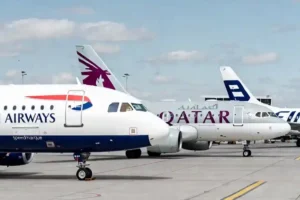
British Airways is a founding member of the oneworld alliance, which currently includes 13 full member airlines plus Fiji Airways (which became a full member in 2025). The full roster: Alaska Airlines, American Airlines, British Airways, Cathay Pacific, Fiji Airways, Finnair, Iberia, Japan Airlines, Malaysia Airlines, Oman Air, Qantas, Qatar Airways, Royal Air Maroc, Royal Jordanian and SriLankan Airlines.
Avios can be used to book reward flights on any of these airlines, and your BA Club status is recognised across the network for lounge access, priority handling and other benefits.
Beyond oneworld, BA has partnerships with additional airlines: Aer Lingus (which shares the Avios currency), LATAM Airlines, and codeshare agreements with airBaltic, Airlink, Bangkok Airways, China Southern, IndiGo, JetBlue, Kenya Airways, Loganair and Vueling. BA also has a unique franchise agreement with Sun-Air of Scandinavia, which operates flights from Billund to London City under a BA flight number — these franchise flights earn both Avios and Tier Points, unlike some partner flights.
Partner redemptions matter because availability and pricing differ between BA’s own flights and partners. Some of the best-value Avios redemptions are on partner airlines: Japan Airlines business class, Qatar Airways Qsuite, Cathay Pacific business class and Qantas business class regularly offer strong returns per Avios spent, often with significantly lower surcharges than BA’s own London flights.
How Partner Awards Are Priced
BA prices partner awards using a distance-based chart, separate from its own flight pricing. Each segment is priced individually based on the great-circle distance between airports, which means connecting flights are priced per segment and can add up significantly. A nonstop flight will almost always cost fewer Avios than a connecting itinerary covering the same route. The Great Circle Mapper is the standard tool for checking distances before committing to a multi-segment partner redemption.
Importantly, flights on multiple partners within a single booking use a different chart calculated on total journey distance, which can sometimes offer better value than pricing each segment separately.
Reward Flights: How Availability and Pricing Work
BA does not publish a traditional fixed award chart for its own flights. Instead, it uses dynamic-style pricing with peak and off-peak dates, distance bands, and variable cash co-pays. The same route can cost different amounts of Avios depending on when you fly and which pricing tier BA applies.
Guaranteed Reward Seats
BA guarantees a minimum number of reward seats on every flight from London Heathrow and London Gatwick, released 355 days before departure (typically appearing around midnight GMT). The guaranteed allocation breaks down as follows:
Short-haul flights: At least 12 reward seats per flight — 8 in Euro Traveller (economy) and 4 in Club Europe (business).
Long-haul flights: At least 14 reward seats per flight — 8 in World Traveller (economy), 2 in World Traveller Plus (premium economy) and 4 in Club World (business). There is no guarantee of First Class reward seats.
These are minimums. BA frequently releases additional seats beyond the guarantee, particularly as departure approaches and if cash sales have not filled premium cabins. Additional availability often appears 90–120 days out (during revenue review periods) and again 2–4 weeks before departure. Schedule changes and aircraft swaps can also push fresh reward availability into the system.
Reward Flight Saver
Reward Flight Saver (RFS) is BA’s most accessible redemption option and the one most UK collectors will use. RFS flights require a fixed number of Avios plus a low, flat cash fee — unlike standard reward flights where the cash surcharge can run into hundreds of pounds on long-haul routes.
On short-haul flights, the cash co-pay under RFS can be as low as £1. On long-haul, the cash element starts around £100 in economy and rises for premium cabins, but remains dramatically lower than standard reward flight surcharges. RFS is available across BA’s entire route network in economy, premium economy and business class. It is not available in First Class, and it only applies to BA-operated flights — not partner bookings.
For travellers with large Avios balances, Reward Flight Saver almost always delivers the best overall value because it minimises the cash outlay. The trade-off is that RFS flights require more Avios than the lowest-Avios option — but the cash saving usually more than compensates.
Avios-Only Flights
Periodically, BA releases entire flights where every seat is sold as a reward seat. These “Avios-Only” flights are announced in advance to Club members and are bookable through the normal reward flight process. They offer dramatically better availability than standard flights — particularly for families needing multiple seats in the same cabin. Companion Vouchers and Upgrade Vouchers can be used on these flights.
The December 2025 Price Increase
In December 2025, BA increased reward flight pricing across the board — roughly 10% on BA-operated flights and up to 14% on some partner routes. Cash surcharges also rose. This was the first significant devaluation in several years and reflected increases in Air Passenger Duty, third-party charges and broader inflation. Flights booked before the change were honoured at old prices, and date or time changes on existing bookings did not trigger the higher fares.
Reward flight pricing has two components: Avios and cash. Always check both before booking. A redemption that looks cheap in Avios terms can carry hundreds of pounds in surcharges, particularly on BA long-haul routes through London. Partner airlines — especially Qatar, Cathay and JAL — often have much lower cash co-pays for the same or similar destinations. Reward Flight Saver caps the cash element, making it the best option for most UK-originating bookings.
Vouchers: The UK Lever Inside the BA System
Vouchers sit alongside Avios as one of the mechanisms that shape how reward flights actually work. They do not create seats and they do not replace Avios. Instead, they change the economics once reward availability already exists.
In the UK ecosystem, vouchers come primarily from BA American Express cards and Barclaycard Avios cards. Their role is to reduce the number of Avios required or improve the cabin you can access.
Companion Vouchers (BA Amex)
Issued annually with the BA American Express Premium Plus card after meeting the spend threshold. When booking a reward flight for two people, the companion’s Avios cost is waived — you pay the Avios for one seat and the companion pays only taxes and surcharges. This effectively halves the Avios cost of a two-person trip.
The Companion Voucher is widely regarded as the single most valuable tool in the UK Avios ecosystem. It applies to any cabin where two reward seats are available, which means it can unlock premium cabins that would otherwise require an enormous Avios balance for two travellers. A Club World return to New York that would cost 176,000 Avios for two people becomes 88,000 Avios plus taxes when a Companion Voucher is applied. Used on a long-haul business class redemption, it routinely delivers thousands of pounds of value from a single credit card benefit.
The BA Amex free card also offers a companion voucher, but restricted to Economy cabin only, after meeting a spend threshold of £15,000.
Upgrade Vouchers (Barclaycard)
Issued by Barclaycard Avios cards when you hit certain annual spend thresholds — £10,000 on the Barclaycard Avios Plus, or £20,000 on the free Barclaycard Avios card. These allow you to travel in a higher cabin while paying the Avios cost of the cabin below, provided reward space exists in both the cabin you are paying for and the one you are upgrading into.
Upgrade Vouchers work differently from Companion Vouchers and require more planning — you need availability in two cabins simultaneously. But they can deliver strong value on long-haul routes where the gap between Economy and Premium Economy, or Premium Economy and Business, is large.
Vouchers amplify value — they do not create it. They only matter once reward seats exist on the flights you want. Availability still drives outcomes. Routing still matters. Avios balances still matter. The voucher simply changes the maths when those pieces line up. Think of vouchers as pricing tools — most powerful when used on trips you already plan to take, not as reasons to book something you otherwise would not.
Other Ways Avios Are Earned (Beyond Flights)
For most UK collectors, the bulk of their Avios balance comes from ground-level earning rather than flying. The main channels include:
Credit cards: BA Amex cards, Barclaycard Avios cards and Amex Membership Rewards cards (which transfer 1:1 to Avios) are the primary earning engines. A well-optimised card strategy can generate 30,000–60,000+ Avios per year from everyday spending alone.
Shopping portals: The BA eStore (shopping.ba.com) offers 1–12+ Avios per £1 at hundreds of retailers. Seasonal events like Black Friday and January sales regularly see elevated rates.
Partner activity: Hotel partnerships (Marriott, IHG, Accor via Qatar), car hire (Avis, Budget), Airbnb (2 Avios per £1 via the dedicated BA link), Uber (1 Avios per £1 on UK rides), Nectar conversions and Heathrow Rewards all contribute Avios from activity that requires no change in behaviour — just linking your membership number.
BA Holidays: Earns 1 Avios per £1 spent on the total package price, on top of flight earning and credit card points.
These ground-level earning routes are covered in detail in the dedicated earning guides elsewhere on this site. The key point here is structural: the BA Club is designed to capture value from a wide range of UK spending, not just from flying. The programme’s strength for UK collectors comes from the density of its earning partnerships, not from the flights themselves.
How the System Fits Together
The British Airways Club works best when it is understood as a structure rather than a points balance. Each component plays a different role, and the programme only makes sense when those roles are kept separate.
Avios — A flexible currency used to reduce the cost of travel across multiple airlines. Movable freely between BA, Iberia, Aer Lingus, Qatar and Vueling. Does not expire with any activity every 36 months.
Tier Points — A status system earned from flight spend (1 per £1 on BA) that improves how travel feels. Resets annually on 31 March. Thresholds at 3,500 (Bronze), 7,500 (Silver), 20,000 (Gold) and 65,000 (Gold Guest List).
Partners — 13+ oneworld airlines plus additional partners expand where Avios can take you and where status recognition applies. Often offer better pricing and lower surcharges than BA’s own flights.
Vouchers — Change the economics of reward bookings once availability exists. The Companion Voucher halves premium cabin costs for two travellers. Upgrade Vouchers move you up a cabin for the Avios price of the cabin below.
Household Accounts — Pool Avios across up to six people at the same address, making family redemptions practical.
Reward Flight Saver — Caps the cash co-pay on BA reward flights, making redemptions affordable. Available across the entire route network in economy, premium economy and business class.
The Club is not one tool. It is a framework that connects earning, status and redemption into a single system. Avios and Tier Points serve different purposes and require different strategies. The shared Avios currency creates flexibility across five airline programmes. Vouchers amplify value when availability exists. Reward Flight Saver makes redemptions affordable. And the oneworld alliance extends both spending power and status recognition far beyond BA’s own network. You do not need to learn everything at once. Start where you are — most people only need one part of this system at a time.