I’ve Got Avios. Now What?
You have the points. Here is how to actually spend them — with current numbers.
You have been collecting for months — maybe years. Credit card spending, flights, shopping portals. Now there is a five- or six-figure balance sitting in your account and you have never actually used it.
This is the most common position in the points world. Earning Avios is passive. Spending them requires a decision — and that decision feels complicated because the system does not explain itself well. You see confusing pricing, seats that are not available, taxes that seem to defeat the point.
It is simpler than it looks. This guide walks you through how Avios spending actually works, what the real costs are, and where to get the best value from your balance.
First: Understand What You Are Buying
When you spend Avios on a flight, you are not buying a ticket in the normal sense. You are accessing a reward seat — a specific allocation of seats that airlines release at fixed Avios prices. Think of them as access tokens, not currency.
This distinction matters because reward seats are limited. Airlines decide how many to release on each flight, and popular routes in popular cabins are taken quickly. The most common frustration is not having too few Avios — it is finding the seats to spend them on.
The other thing to understand upfront: reward flights are not free. You always pay some cash alongside your Avios — taxes, fees and carrier charges. On short-haul flights this can be as low as £1 each way. On long-haul flights in premium cabins, it can be several hundred pounds. Every redemption is an Avios-plus-cash decision, and both sides matter.
Avios success is an availability problem, not a points problem. If you have 50,000 Avios and cannot find seats, the issue is not your balance — it is when and where you are looking.
What Things Actually Cost
BA uses distance-based pricing with two tiers: peak and off-peak. The dates are published in advance for the full year, so you always know which tier applies before you book. Prices below reflect the December 2025 update (approximately 10% across the board) and use the “most Avios, least cash” Reward Flight Saver option. All prices are one-way per person from London.
Short-Haul Economy
Paris, Amsterdam, Dublin: from around 9,750 Avios off-peak, plus £1 cash. Barcelona, Nice, Rome: from around 10,500 Avios off-peak, plus £1 cash. These are extraordinary value — a return to Paris for roughly 19,500 Avios plus £2 cash replaces a fare that might cost £150+ in cash.
Short-Haul Business (Club Europe)
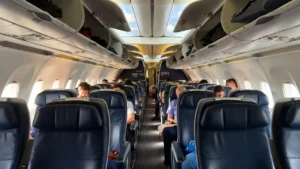
Roughly 17,000–21,000 Avios off-peak one-way, plus around £15 cash. The cash element is minimal. On short-haul routes, Club Europe is more like a premium seat with a better meal than a full lie-flat experience — but at these Avios levels it can be worth it for morning flights or when seat selection matters.
Long-Haul Economy
New York: from around 24,000 Avios off-peak one-way, plus approximately £220 cash. Dubai, Cape Town, Singapore: higher Avios but the same principle — distance-based pricing with a fixed cash component under Reward Flight Saver.
Long-Haul Premium Economy (World Traveller Plus)
New York: from around 46,750 Avios off-peak one-way, plus approximately £175 cash. Premium Economy is often overlooked. The Avios requirement is roughly double Economy, but the cash element is actually lower under Reward Flight Saver — and the cabin experience on long-haul is significantly better.
Long-Haul Business (Club World)
New York: from around 88,000 Avios off-peak one-way (176,000 return), plus approximately £200 each way. Peak adds roughly 10,000 Avios each way (so 198,000 return peak). Tokyo: from around 121,000 Avios off-peak one-way. Sydney: from around 159,500 Avios off-peak one-way.
First Class
New York: from around 150,000 Avios off-peak one-way. First Class is not covered by Reward Flight Saver — you pay full taxes, fees and carrier charges, which currently exceed £800–1,000 return on transatlantic routes. No First Class seats are guaranteed for Avios redemption, so availability is unpredictable. When seats do appear, the experience is exceptional — but the cash outlay is significantly higher than Club World.
Short-haul Economy is the easiest Avios win. A return to Paris for roughly 19,500 Avios plus £2 cash is extraordinary value — that same flight might cost £150+ as a cash fare. If you have never redeemed Avios before, start here. Book one European return and see how the process works. It takes ten minutes and you will understand the system far better than any guide can teach you.
Where the Real Value Sits
Not all Avios redemptions are equal. Some give you less than 0.5p per point. Others deliver 2p or more. The difference comes down to what the cash alternative would have cost.
The general rule: the more expensive the cash fare you are avoiding, the more valuable your Avios become.
Best value — premium cabins on expensive routes: A Club World return to New York costs around 176,000 Avios plus £400 cash. The same ticket in cash regularly costs £3,000–5,000, sometimes more in peak periods. At 176,000 Avios avoiding a £4,000 fare (minus the £400 you still pay), that is roughly 2p per Avios. With a Companion Voucher halving the Avios cost, the value per point doubles.
Strong value — short-haul at peak times: A return to Barcelona in school holidays might cost £300+ in cash. Using Avios, it is around 21,000 Avios plus £2. If those Avios came from credit card spending you were doing anyway, that is a £300 flight for £2 out of pocket.
Weak value — cheap cash fares: If a flight to Berlin is on sale for £45, spending 10,000 Avios plus £1 to avoid that £45 gives you less than 0.5p per point. You would get better value converting Avios to Nectar points and spending them in Sainsbury’s. In these cases, pay cash and save your Avios for a more expensive flight.
The quick test: check what the cash fare would cost. If spending Avios saves you more than 1p per point, it is a good redemption. Below 0.5p per point, you are better off paying cash and keeping your balance for something bigger.
The Companion Voucher Changes Everything
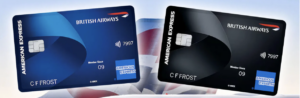
If you hold the BA American Express Premium Plus card and spend £15,000 in a card membership year, you earn a Companion Voucher. This is the single most powerful tool in the Avios ecosystem.
The voucher lets you book two reward seats for the Avios cost of one. On long-haul Business Class, this is transformative. Two Club World seats to New York off-peak: approximately 176,000 Avios total (not each) plus around £400 cash per person. That is two Business Class tickets to New York for 176,000 Avios and roughly £800 total — replacing cash fares that could easily total £6,000–8,000 for two.
The voucher also works on Iberia and Aer Lingus flights, and the Premium Plus voucher is valid in any cabin including First Class. Solo travellers can use it for a 50% discount on the Avios cost of a single ticket instead.
For a full breakdown of how the Companion Voucher works — including booking mechanics, 355-day tactics and the rules — see our dedicated Companion Voucher guide.
If you have a Companion Voucher, plan your biggest redemption around it. The Premium Plus voucher is valid for two years. Book the most expensive cabin you can on the longest route you want — that is where the voucher delivers its highest value. Do not use it on a short-haul Economy flight unless that is genuinely the trip you want.
Don’t Just Book Through BA
Avios are a shared currency across multiple programmes — BA, Iberia, Aer Lingus, Qatar Airways and Finnair — and you can transfer between them for free. The same flight can cost different amounts of Avios depending on which programme you book through, because each has its own peak/off-peak calendar, pricing structure and surcharge levels.
Iberia is often cheaper than BA on overlapping routes. Madrid to New York in Business Class can cost significantly fewer Avios through Iberia Plus than through BA. Iberia also charges lower surcharges on many routes. If you are willing to position to Madrid (or use Iberia’s direct services), transfer your Avios to Iberia Plus — it is free and instant — and book there. Iberia and Aer Lingus bookings also avoid UK Air Passenger Duty if you depart from Dublin or Madrid, further reducing the cash outlay.
Aer Lingus operates direct flights from Manchester to New York, Orlando and Barbados. These can be excellent value for anyone not based in London. Aer Lingus is always off-peak outside school holidays.
Qatar Airways has its own pricing through Privilege Club. Booking Qatar flights through their own programme can sometimes be cheaper than booking the same flight through BA, particularly in premium cabins. Qatar often undercuts BA on partner airline awards too.
Before any long-haul booking, check the Avios price through at least two programmes. Transferring between BA, Iberia and Aer Lingus is free and instant. Your Iberia Plus account must be open for 90 days before you can transfer Avios in, so set this up now if you have not already.
How to Find Seats
Availability is the real skill. Here is how it works.
BA guarantees minimum reward seats on every flight from Heathrow and Gatwick: eight in Economy, two in Premium Economy and four in Business Class. No First Class seats are guaranteed. London City flights guarantee two Business and two Economy seats. These appear when the schedule opens — 355 days before departure. On popular routes, they go fast.
Search across weeks, not single dates. BA’s website offers flexible date searching. Use it. Looking at a single day hides patterns. Looking across a month shows you where seats cluster — often midweek, often outside school holidays.
One seat is easier to find than two. If you need two Business Class seats on the same flight, you are competing for the same limited allocation as everyone else. Being flexible by even a day or two makes a significant difference.
Seats reappear closer to departure. If a flight is not selling well commercially, airlines sometimes release more reward seats in the final weeks. This is not reliable enough to plan around, but it is worth checking routes you want 2–4 weeks before travel.
Use third-party tools. Services like Reward Flight Finder and SeatSpy monitor BA reward seat availability across routes and alert you when seats appear. They cannot see the enhanced Club World seats that are only visible with a Companion Voucher, but they are invaluable for tracking standard availability patterns.
Set a calendar reminder for 355 days before your target travel date. Log in at midnight GMT the day seats open. This is when the guaranteed Business Class reward seats first become available — and on popular routes like New York, Cape Town or Tokyo, they can disappear within hours.
Peak vs Off-Peak
The difference between peak and off-peak is typically 10,000 Avios each way on long-haul Business Class, and 1,000–5,000 Avios on Economy depending on distance. For a couple using a Companion Voucher, the peak surcharge is absorbed into the price of one booking — so the extra cost is less dramatic than it appears.
Where it matters most is if your balance is tight. If you have exactly 90,000 Avios and need 88,000 for an off-peak Business Class one-way to New York, shifting one day from peak to off-peak is the difference between booking and not booking.
The off-peak calendar is most generous in January (after the 5th), February, March (outside Easter), September, October, and early November. August is entirely peak. Christmas is almost entirely peak. The exact dates are published on ba.com for the full year — and the 2026 calendar is slightly more generous than 2025.
The December 2025 Pricing Increase
From 15 December 2025, BA increased Avios pricing across all flights by roughly 10%, with taxes and fees also rising. This applies to BA-operated flights and partner airlines booked through BA.
The increase is real but not catastrophic. The cash increases hit Economy hardest proportionally, while Business Class saw the smallest proportional impact. For long-haul Business Class — particularly with a Companion Voucher — Avios remain excellent value. Spending 176,000 Avios to avoid a £3,000+ cash fare is strong regardless of whether it was 160,000 Avios last year.
One notable change: the “fewer Avios, more cash” pricing slider used to be a hack for extracting better value on short-haul. Post-devaluation, the maths often favours burning more Avios instead. On long-haul, the “most Avios, least cash” option remains the best value in most cases.
The important lesson is that Avios devalue over time. Every year, the same points buy slightly less. This is the strongest argument against hoarding — spend your Avios on trips you want, because the value only goes down from here.
Avios are not a savings account. They do not earn interest and they lose value through periodic devaluations. If you have enough Avios for a trip you want, book it. Waiting rarely improves the outcome.
Part Pay with Avios
If you cannot find reward seat availability on your preferred dates, BA offers an alternative: using Avios to reduce the cash price of a regular ticket. This is called “Part Pay with Avios” and it works on a much wider range of flights than pure Avios redemptions.
The value is typically lower — you might get 0.5–0.8p per Avios compared to 1–2p on a reward seat. But if the alternative is not flying at all, or if you are sitting on a small balance that is not enough for a full redemption, Part Pay can be a reasonable use. The December 2025 devaluation did not affect Part Pay pricing.
Upgrade Using Avios
If you have bought a cash ticket, BA also allows you to use Avios to upgrade to the next cabin — from Economy to Premium Economy, or Premium Economy to Business — depending on availability. This is priced on the difference in Avios between the two cabins.
Interestingly, “Upgrade Using Avios” on long-haul is still priced based on the older (pre-December 2022) Avios levels, adjusted by 10% for the December 2025 devaluation. This means the upgrade cost is often significantly lower than you would expect from looking at the current full-cabin Avios pricing. For example, upgrading a cash Premium Economy ticket to Club World on the New York route costs approximately 52,800 Avios — almost 30,000 fewer than the calculated difference between the two cabins at current full prices.
This pricing anomaly makes “Upgrade Using Avios” one of the better-value uses of a small to medium Avios balance, particularly if you were going to buy a Premium Economy ticket anyway.
Your First 30 Minutes
If you have read this far but never actually booked a reward flight, do these things now. The goal is not to master the system — it is to make one booking and learn from the experience.
Check your total balance. Log into your BA Club account. If you also have Iberia, Aer Lingus or Qatar accounts, check those too. You can transfer between them for free — your usable balance may be higher than you think.
Check for a Companion Voucher. If you hold the BA Amex Premium Plus, check your account for an active voucher. This single tool changes your entire strategy.
Search one short-haul route. Pick a European city you would actually visit. Search flexible dates across the next three months. Short-haul Economy seats are usually plentiful, and you will see pricing and availability patterns immediately.
Search one long-haul route. Pick somewhere you would genuinely go. Search across several weeks, 6–12 months out. Look for Business Class availability. Even if you do not book, you will learn what “normal” availability looks like.
Pick one booking and commit. A European return. A one-way upgrade. A voucher-led long-haul trip. Having a single target makes searching focused and efficient.
Avios are worth something today and less tomorrow. The system rewards action over accumulation. Check your balance, search for real availability, and book the trip. Every month you wait, the same points buy slightly less. Start with a short-haul return to Europe — roughly 20,000 Avios plus £2 cash. See how it works. Then plan bigger.