Programme Arbitrage: Same Flight, Different Price
Here’s the fundamental insight that separates advanced points users from everyone else: the same physical seat on the same physical aircraft can cost dramatically different amounts depending on which loyalty programme you book through. Same departure, same cabin, same meal, same bed — but tens of thousands of points apart and hundreds of pounds different in taxes.
This isn’t a loophole. It’s a structural feature of how airline loyalty programmes are designed. Each programme sets its own pricing charts, surcharge policies and peak/off-peak calendars independently. The result is a permanent landscape of pricing gaps that reward people who compare before they commit. That comparison process — checking the same route through every available programme and booking site — is what we call programme arbitrage.
Programme arbitrage isn’t about finding secret deals. It’s about doing what most people don’t: checking two or three booking options before accepting the first price they see. The savings are structural and repeatable, not one-off glitches. Once you understand where the pricing gaps are, you’ll find them on almost every booking.
The Avios Ecosystem: One Currency, Five Different Prices
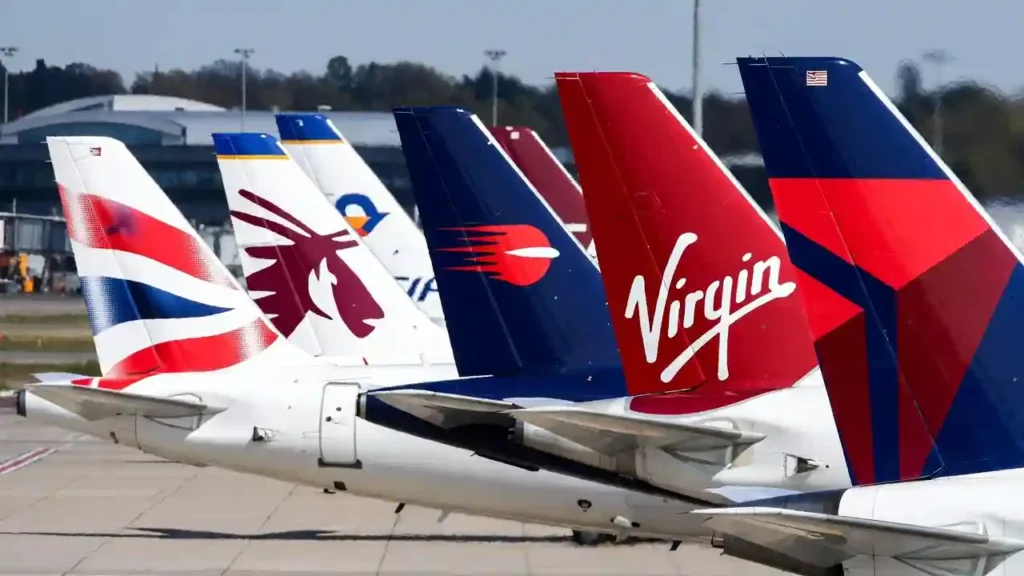
Avios is the most powerful arbitrage currency available to UK travellers, because the same points work across multiple programmes with entirely different pricing structures. British Airways Executive Club, Qatar Airways Privilege Club, Iberia Plus, Aer Lingus AerClub and Finnair Plus all use Avios — and you can transfer between them instantly, for free, at a 1:1 ratio. But each programme sets its own award charts, surcharges and peak/off-peak calendars.
This means the same Avios, spent on the same route, can produce wildly different total costs depending on which programme you book through.
BA vs Qatar: the core comparison
For any route served by both BA and Qatar, you should price it through both programmes every time. The Avios cost for BA-operated long-haul flights is the same whether you book through BA Executive Club or Qatar Privilege Club. But two things can differ: the peak/off-peak classification of your dates, and the surcharges on partner airline bookings.
BA and Qatar use different peak/off-peak calendars. The same date might be off-peak in one programme and peak in the other — a difference of 10,000–20,000 Avios per person per direction on long-haul Business. Before accepting a peak price in one programme, always check whether the same date falls off-peak in the other.
Where the gap becomes dramatic is on partner and Qatar-operated flights. A Qatar Airways Qsuites flight from London to Doha costs roughly 70,000 Avios off-peak through Qatar Privilege Club, with surcharges of around £100–150 total. The same flight priced through BA can cost more Avios with higher surcharges. And on some connecting itineraries (London–Doha–Bangkok, for example), the differential can reach 50% — you might pay double the Avios through BA for the same seats.
The practical rule: for Qatar-operated flights, always price through Qatar Privilege Club first. For BA-operated flights, check both programmes — the Avios cost is usually identical, but the peak/off-peak calendar difference can save you thousands of points.
To transfer Avios between BA and Qatar, link your accounts via the Combine My Avios function. Transfers are instant, free and unlimited. Your accounts must be at least 90 days old with at least one earning or spending activity. Make sure your name, date of birth and email match exactly across both accounts — mismatches will block the link.
The Iberia arbitrage
Iberia Plus is where some of the largest Avios savings in the entire ecosystem sit — particularly for transatlantic Business Class. Iberia’s award chart prices long-haul flights differently from BA’s, and surcharges on Iberia-operated flights are substantially lower than on BA metal.
The headline comparison: Business Class to New York. Through BA, an off-peak return costs 176,000 Avios plus roughly £200–250 in Reward Flight Saver fees. Through Iberia, an off-peak one-way from Madrid to New York costs around 40,500 Avios (post-2025 devaluation), with surcharges well under £150. That’s 81,000 Avios return versus 176,000 — less than half the Avios cost, with lower cash on top.
The catch: Iberia flights route through Madrid, so you need to factor in positioning. But this is where the arbitrage gets clever. You book a separate cheap flight to Madrid (a low-cost carrier, or a short-haul Avios redemption for 9,250 Avios + £1 each way) and start your long-haul ticket from Madrid. This avoids UK long-haul Air Passenger Duty entirely — saving over £200 per person. The positioning cost is usually a fraction of the APD you’d pay departing London on a BA ticket.
One critical detail: BA and Iberia use different peak/off-peak calendars, and because Iberia is a Spanish airline, its calendar aligns with Spanish rather than British school holidays. UK February half-term might be peak on BA but off-peak on Iberia — a date where BA charges 180,000 Avios peak could be 81,000 through Iberia off-peak. Always check both calendars.
Iberia availability is tighter than BA — generally two guaranteed Business Class seats per flight, compared to BA’s four. Book at 360 days (Iberia opens five days earlier than BA’s 355-day window) and search on iberia.com first, then ba.com. A companion voucher works on Iberia bookings made through ba.com, which can combine the voucher discount with Iberia’s lower chart pricing.
The Aer Lingus route
Aer Lingus offers another arbitrage angle, particularly for North American routes from Ireland. Business Class from Dublin to New York on Aer Lingus costs 50,000 Avios off-peak, with surcharges dramatically lower when booked through AerClub (via avios.com) rather than through ba.com. The difference can be hundreds of pounds in cash — the same flight, same Avios cost, but a fraction of the taxes.
The structural advantage is APD avoidance. Departing from Dublin rather than London eliminates UK long-haul Air Passenger Duty. If you book your UK-to-Dublin flight separately (a short-haul redemption or cheap cash fare), your long-haul ticket originates in Ireland and UK APD doesn’t apply. For a family of four flying Business Class to the US, APD avoidance alone can save over £800.
The process requires extra steps: open a free AerClub account, transfer Avios from BA via Combine My Avios, then book through avios.com using your AerClub login. The search interface is clunky (one day at a time), and Business Class availability can be very tight. But when a seat is available, the savings are substantial.
Aer Lingus also offers US immigration pre-clearance at Dublin, meaning you arrive in the US as a domestic passenger and walk straight out — no immigration queues. This is a genuine operational benefit on top of the pricing arbitrage.
Finnair: the niche play
Finnair Plus rounds out the Avios ecosystem. Its zone-based chart is generally slightly more expensive than BA for most routes, but there are pockets where Finnair pricing undercuts BA — particularly some long-haul Business Class routes via Helsinki. Finnair charges the same 18,000 Avios as BA for London to Helsinki in Business, but with lower surcharges through Finnair Plus than through BA Executive Club.
Finnair’s main value is access: it prices Star Alliance partner flights differently from the other Avios programmes, and for some Asian routes via Helsinki, Finnair Avios can deliver competitive pricing. It’s a secondary tool rather than a primary one, but worth checking when your route passes through Nordic Europe.
For every Avios booking, check the price through at least BA and Qatar. For transatlantic flights, add Iberia. For North American routes, add Aer Lingus. The same Avios — transferable instantly for free — can cost 50% less on the same route depending on which programme you book through. This is the highest-impact arbitrage available to UK points collectors.
Cross-Currency Arbitrage: When a Different Programme Wins
Programme arbitrage isn’t limited to the Avios ecosystem. UK travellers with Amex Membership Rewards (or other transferable currencies) can choose between Avios, Virgin Atlantic Flying Club, Emirates Skywards, Singapore Airlines KrisFlyer and others. The same transferable points, sent to different programmes, produce very different outcomes on the same route.
London to New York: the classic comparison
This is the most-flown premium cabin route from the UK, and it illustrates cross-currency arbitrage perfectly.
Through BA: 88,000 Avios one-way Business off-peak, plus roughly £100–125 cash under Reward Flight Saver. Predictable, reliable availability (four guaranteed Business seats per flight), and the companion voucher halves the Avios to 44,000 per person for two travelling together.
Through Virgin Atlantic: Upper Class saver fares from 29,000 points one-way (dynamic pricing, so availability at this rate is limited). On a good day, 58,000 points return for Upper Class to New York — roughly a third of BA’s Avios cost. Taxes around £200–400. But on peak dates, the same seat might cost 150,000+ points.
Through Qatar via Doha: roughly 70,000 Avios off-peak for Qsuites to Doha, then a connecting flight onward. More Avios overall than BA direct, but a significantly better product (Qsuites is widely regarded as the best Business Class in the world) and lower surcharges. Longer journey though — Doha adds 3–4 hours minimum.
No single programme always wins. BA with a companion voucher is exceptional for couples. Virgin saver fares offer the lowest point cost for flexible solo travellers. Qatar delivers the best product with competitive pricing and minimal surcharges for anyone willing to route through Doha.
London to the Middle East: surcharge-driven decisions
This is where surcharge arbitrage becomes the dominant factor. The same London to Dubai route produces very different total costs.
Through BA: roughly 88,000 Avios one-way Business plus £100–125 under Reward Flight Saver. Straightforward, moderate total cost.
Through Emirates Skywards: roughly 72,500 miles one-way Business, but with surcharges of several hundred pounds per leg. A Business Class return can carry £600+ in taxes and surcharges — sometimes exceeding £1,000. The miles cost is competitive but the cash cost undermines the value.
Through Qatar to Doha (then position to Dubai): roughly 70,000 Avios off-peak for Qsuites with surcharges of £100–150. You’d need a separate short connection to Dubai, but the combined cost is often lower in both points and cash than an Emirates direct booking.
The pattern here applies across Middle Eastern routes: Qatar’s low surcharges make it the default choice on points cost, even when Emirates or BA offer a more direct routing. Emirates surcharges are the programme’s persistent weakness — the product is excellent but the all-in cost frequently exceeds what other programmes charge for equivalent or better cabins.
Always calculate the total cost — points plus cash — rather than comparing points alone. A redemption that costs fewer points but £500 more in surcharges isn’t necessarily better value. Work out the cash value per point for each option: divide the avoided cash fare by the points spent. The option with the highest pence-per-point value is usually the right choice.
Asia and long-haul: where Star Alliance enters
Routes to Southeast Asia, Japan and Australasia are where the choice of programme matters most, because the number of viable options expands significantly.
BA Avios prices per-segment on partner airlines, so a London–Singapore itinerary with a connection prices as two separate segments. This can make multi-leg Avios bookings to Asia expensive — particularly if the routing involves long connecting flights.
Singapore Airlines KrisFlyer prices London to Singapore Business at roughly 80,000–85,000 miles Saver, with low surcharges. You’d transfer Amex MR at a 3:2 ratio (so 120,000–127,500 Amex points for 80,000–85,000 KrisFlyer miles). The transfer penalty is significant, but Singapore Airlines Business Class is a premium product that consistently outperforms BA Club World, and Suites Class on the A380 is in another category entirely.
Qatar via Doha offers a competitive alternative: London to Singapore via Doha in Qsuites is bookable with Avios through Qatar Privilege Club. The Avios cost and surcharges are moderate, and you get Qsuites both ways — a world-class product throughout.
For Japan specifically, BA Avios can price competitively for Japan Airlines Business on nonstop London–Tokyo flights (when available through BA). But the December 2025 Avios devaluation increased partner award prices — JAL and Cathay Pacific saw among the steepest rises.
The decision framework for Asia: if you value the lowest Amex transfer cost, use Avios (1:1 transfer) through whichever programme prices best. If you specifically want Singapore Airlines metal and can absorb the 3:2 transfer penalty, KrisFlyer delivers a superior product with low surcharges. If you want a reliably excellent product with moderate pricing, Qatar via Doha is the consistent safe bet.
The Booking Site Arbitrage
Even within the same programme and currency, where you book can change the price. This is the most overlooked form of arbitrage.
ba.com vs iberia.com vs aerlingus.com vs avios.com
An Iberia-operated flight searched on ba.com will use Iberia’s award chart pricing (not BA’s) — so the Avios cost is the same regardless of where you search. But the taxes and surcharges can differ. The same Iberia flight often shows lower total cash when booked directly on iberia.com compared to ba.com.
For Aer Lingus, the difference is stark. Booking through avios.com (using AerClub credentials) regularly shows hundreds of pounds less in surcharges than the same flight on ba.com. On transatlantic Business Class, this gap can be £500+. The flight, cabin and Avios cost are identical — only the cash element changes.
The reason is structural: each booking platform applies its own ticketing airline’s surcharge policy. BA-ticketed bookings carry BA’s surcharge structure. AerClub-ticketed bookings through avios.com carry a different (lower) surcharge structure, even for the same Aer Lingus flight.
Qatar website vs BA website for Qatar flights
Qatar-operated flights can be booked through either qatarairways.com (Privilege Club) or ba.com (Executive Club). For Qatar’s own flights, the Avios cost is usually the same through both — but check peak/off-peak alignment on your specific dates, as the calendars differ.
Where it matters more is partner flights. Qatar’s partner award charts have recently been aligned closer to BA’s pricing, reducing the old gaps. But on some routes — particularly connecting itineraries through Doha — pricing through Qatar Privilege Club can still be substantially cheaper than through BA.
Cancellation fees also differ: Qatar charges roughly $25 per ticket to cancel (more than 24 hours before departure), versus BA’s £35 per person. If you’re speculatively booking and might cancel, this affects total risk cost.
Build a comparison habit. For every reward booking, check at minimum: ba.com, qatarairways.com, and (for transatlantic) iberia.com and avios.com with AerClub. It takes five minutes and routinely saves 20,000–50,000 Avios or hundreds of pounds in cash. The more sites you check, the more arbitrage you find.
Calendar Arbitrage: Same Route, Different Dates, Different Programmes
Peak and off-peak calendars are set independently by each programme, and they don’t always align. This creates predictable, exploitable pricing gaps around specific holiday periods.
How the calendars diverge
BA’s peak dates align with UK school holidays — half-terms, Easter, summer, Christmas. Iberia’s align with Spanish holidays. Qatar sets its own calendar based on Middle Eastern travel patterns. These overlapping but non-identical calendars mean that a date classified as peak by one programme might be off-peak in another.
The highest-impact divergences occur around February half-term, Easter and October half-term. UK half-term dates don’t necessarily correspond to Spanish school holidays, so Iberia is often off-peak when BA is peak. For families constrained to school holidays, this is one of the most valuable arbitrage opportunities available — the difference between peak and off-peak on long-haul Business can be 20,000+ Avios per person per direction.
Dynamic vs fixed calendar arbitrage
Virgin Atlantic’s dynamic pricing creates a different kind of calendar opportunity. Because pricing responds to real-time demand, Virgin’s cheapest dates don’t follow a published calendar — they follow actual booking patterns. A date that’s peak for BA (school holidays, high published prices) might still show moderate Virgin pricing if the specific flight hasn’t filled.
This is where the Virgin Reward Seat Checker becomes essential. Check the monthly calendar view for your route: the saver-priced dates (marked in red on the checker) represent the real value windows. These don’t always correspond to BA’s off-peak calendar — sometimes Virgin offers saver pricing on a date BA classifies as peak, and vice versa.
The arbitrage play: if your date is peak on BA, check whether it’s off-peak on Qatar or Iberia. If none of the fixed-chart programmes are off-peak, check whether Virgin has a saver fare. The flexibility to switch programmes based on calendar classification, rather than committing to one programme regardless of date, is one of the most powerful tools in the points traveller’s toolkit.
Peak/off-peak calendars are set independently by each programme. UK school holidays are peak on BA but may be off-peak on Iberia, Qatar or Virgin. Before accepting a peak surcharge in any programme, check whether the same date is classified differently elsewhere. For families locked into school holidays, this calendar divergence is often worth 40,000–80,000 Avios per booking.
Voucher and Status Arbitrage
Companion vouchers and status benefits create a separate layer of programme-specific value that should factor into every comparison.
The BA companion voucher effect
The BA Amex Premium Plus companion voucher (Travel Together Ticket) halves the Avios cost for two people and — critically — unlocks additional Business Class availability that isn’t visible on standard reward searches. This changes the arbitrage calculation entirely for couples.
Without the voucher, a Business Class return to New York for two people costs 352,000 Avios off-peak (176,000 each). With the voucher, it’s 176,000 Avios for both (88,000 each way, second person free). That saving of 176,000 Avios often makes BA the clear winner even when other programmes offer a lower per-person rate.
But the voucher only works through ba.com. You can use it on BA, Iberia and Aer Lingus flights booked through BA — not through Qatar, Virgin or Emirates. So the arbitrage question for couples becomes: is the voucher discount on BA bigger than the savings available through another programme? For long-haul Business, the answer is almost always yes.
The voucher also works on First Class (where available), producing some of the most extraordinary value in UK points travel. Two people in BA First to New York at 68,000 Avios off-peak (one-way, both passengers) plus modest taxes — when First is cheaper than Business under Reward Flight Saver pricing — is a redemption that delivers thousands of pounds of value from a free credit card benefit.
Status-based availability
BA Gold and Silver members see enhanced reward seat availability. Qatar Privilege Club status also unlocks additional Qsuites seats. Emirates restricts First Class awards to Silver+ members. These status-based gates mean the arbitrage comparison changes depending on your status level — a programme you couldn’t book through at base tier might open up with status.
For BA Executive Club members with Gold status, reward availability expands significantly in Club World. If you have Gold and your partner doesn’t, book through BA to access Gold-tier availability rather than routing through Qatar (where you might not have equivalent status). Status in one programme can make it the best booking option even if the raw pricing favours another.
Virgin Gold: free cancellations
Virgin Atlantic Flying Club Gold members get free cancellations on reward bookings. This converts Virgin from a programme where speculative booking is expensive (£80–100 cancellation fee at standard tier) to one where speculative booking is free. If you hold Virgin Gold, you can lock in saver fares speculatively with zero risk — a significant advantage over BA’s £35 per person cancellation fee.
The best programme for any booking depends on your personal circumstances: which cards you hold, which vouchers are available, what status you have, and whether you’re booking for one person or two. A couple with a BA companion voucher should almost always book through BA, regardless of whether Qatar or Iberia offer lower per-person rates. A solo flexible traveller with Virgin Gold should prioritise Virgin saver fares with free cancellation optionality. Programme arbitrage isn’t just about comparing prices — it’s about comparing prices in the context of your own toolkit.
Hotel Arbitrage
Hotel redemptions offer a simpler but still valuable form of programme arbitrage, primarily because the same property can be bookable through different channels at different point costs.
Direct programme vs transfer partner
Hilton, Marriott and Hyatt each have their own points currencies, but the same hotels are sometimes bookable through airline programmes (Avios through BA Holidays, for example) or through credit card travel portals. The direct programme booking is usually the best value — particularly with Hyatt’s fixed category pricing, where the ceiling is dramatically lower than Hilton or Marriott’s dynamic rates.
The primary hotel arbitrage for UK travellers is the fifth-night-free benefit. Both Hilton and Marriott offer a free fifth night when you book five consecutive nights with points. This is a 20% discount that applies automatically — always book in five-night blocks when possible. A Hilton property showing 200,000 points per night costs 800,000 for five nights (not 1,000,000). At high-end properties, this saves the equivalent of hundreds of pounds.
Cash vs points vs Avios
Hotel programmes have suffered significant inflation in recent years. Hilton’s nightly cap has risen three times in 2025 alone (150,000 to 200,000 to 250,000 points per night). Marriott’s dynamic pricing pushes ultra-luxury properties above 300,000 points per night. In some cases, paying cash — particularly with a cashback or Amex points offset — delivers better value than using hotel points.
The comparison is simple: divide the cash rate by the points cost to get the pence-per-point value. If your alternative use of those points delivers higher pence-per-point (for example, transferring Amex MR to Avios for flights), pay cash for the hotel and save the points for flights. This is particularly true at Hilton and Marriott, where points inflation has eroded redemption value.
Hyatt remains the exception: fixed category pricing means a Park Hyatt at 30,000–40,000 points per night often delivers outstanding value compared to cash rates of £500–800+. Hyatt points are consistently the best-value hotel currency, which is why experienced points travellers tend to concentrate hotel stays with Hyatt where possible.
Hotel arbitrage is simpler than flight arbitrage: compare the pence-per-point value of a points booking against the cash rate, and use whichever delivers better value. Book in five-night blocks for the automatic 20% discount at Hilton and Marriott. Concentrate loyalty with Hyatt where possible — their fixed pricing consistently outperforms the inflated dynamic rates at competing programmes.
Building Your Decision Framework
Programme arbitrage can feel overwhelming if you try to check everything every time. In practice, you need a systematic comparison routine that takes five to ten minutes per booking. Here’s the framework.
Step 1: Identify every programme that serves your route
For any route from the UK, list the programmes that can book it. London to New York, for example: BA Avios (direct), Virgin Points (direct), Qatar Avios (via Doha), Iberia Avios (via Madrid), Aer Lingus Avios (via Dublin), Emirates Skywards (via Dubai). Six options for the same destination.
Step 2: Check the total cost (points + cash) through each
Don’t just compare points — compare the all-in cost. Include surcharges, APD (where applicable), and any positioning flights needed. A route via Madrid that costs half the Avios but requires a £100 positioning flight and a hotel night still might be cheaper overall — or it might not. Do the maths.
Step 3: Factor in your personal toolkit
Apply your vouchers, status, and flexible dates. A companion voucher on BA might override a cheaper per-person rate on Iberia. Virgin Gold free cancellations might override a slightly higher points cost. Peak dates on BA might be off-peak on Qatar. Your toolkit changes the answer.
Step 4: Consider the product
If two options are within 10–20% of each other on total cost, let the product decide. Qatar Qsuites versus BA Club World for similar Avios costs? Qsuites wins. Virgin Upper Class versus BA Club Suite for similar points? A judgment call based on preference, but worth making consciously rather than defaulting to one programme.
Step 5: Book with the best cancellation terms
If you’re booking speculatively (dates might change, availability might improve), factor in cancellation costs. BA’s flat £35 per person and Qatar’s $25 per ticket make speculative booking cheap. Virgin’s £80–100 per person makes it expensive — unless you have Gold status. Book through the programme that gives you the most flexibility for the least risk.
Keep a simple spreadsheet or note with columns for: programme, points cost, cash cost, total value, voucher applicable (yes/no), cancellation fee. Fill it in for each booking. After three or four bookings, you’ll have memorised the patterns for your regular routes and the comparison will take two minutes rather than ten.
Common Arbitrage Wins for UK Travellers
These are the patterns that come up repeatedly. They’re not guaranteed — pricing and availability change — but they represent the structural gaps that have persisted across programme changes and devaluations.
Transatlantic Business Class: Iberia via Madrid is almost always cheaper in Avios than BA from London, especially during UK school holidays that fall off-peak on Iberia’s calendar. With positioning, it’s the best-value Business Class crossing available through Avios.
Qatar Qsuites to/through Doha: Booking through Qatar Privilege Club rather than BA consistently delivers lower surcharges and, on connecting itineraries, often fewer Avios. For any route through Doha, default to pricing through Qatar first.
Virgin saver fares on off-peak dates: Upper Class at 29,000 points one-way to New York offers roughly three times the pence-per-point value of a standard BA Business redemption. It requires date flexibility, but when available, it’s the single best premium cabin redemption from the UK.
Aer Lingus from Dublin to North America: Saves UK APD (£200+ per person) and shows lower surcharges when booked through AerClub rather than BA. Business Class availability is tight, but Economy awards from Dublin are consistently good value.
BA First Class below Business pricing: On certain routes under Reward Flight Saver, First Class costs fewer Avios than Business. London to Abu Dhabi and London to New York have both priced this way. Always check First availability — you might pay fewer points for a better cabin.
BA companion voucher on any long-haul: For couples, the 2-for-1 voucher nearly always makes BA the winner regardless of what other programmes charge per person. Combined with the occasional First-below-Business pricing anomaly, this is the single most valuable tool in UK points travel.
Programme arbitrage is a comparison discipline, not a one-time trick. The same route costs different amounts through different programmes because of structural differences in award charts, surcharges, calendars and voucher eligibility. The savings are real and repeatable: tens of thousands of points and hundreds of pounds per booking, available to anyone willing to spend five minutes comparing before they commit. Build the habit, keep a simple record, and you’ll consistently get more travel from the same points balance.