What oneworld Actually Is
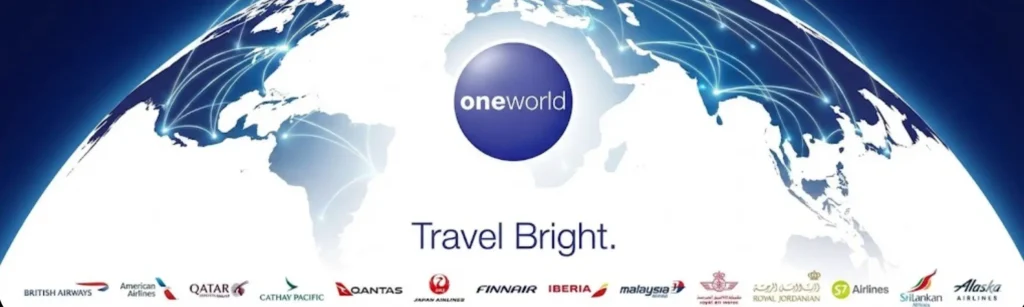
oneworld alliance is not a single airline and it is not a loyalty programme. It is a cooperation agreement between airlines that allows them to coordinate schedules, recognise status and extend networks beyond what any one carrier could operate alone.
In practical terms, an alliance allows several airlines to behave as one connected system. You might book with one carrier, connect onto another, and still receive consistent treatment across the journey — through-checked baggage, coordinated rebooking if things go wrong, and status recognition at every touchpoint.
For UK travellers, this matters because British Airways does not fly everywhere. The alliance extends reach into regions where BA has limited or no coverage, while maintaining coordinated benefits such as through-ticketing, baggage agreements and lounge access.
oneworld was founded in 1999 by British Airways, American Airlines, Canadian Airlines, Cathay Pacific and Qantas. It has since grown to 15 full member airlines serving over 900 destinations across more than 170 countries and territories. It is the third-largest global airline alliance by passenger numbers, behind SkyTeam and Star Alliance.
There is no standalone oneworld frequent flyer programme. You earn status through your chosen airline’s own programme — for UK travellers, typically the British Airways Club — and that status is then recognised across every alliance member.
Alliance Mechanics
Member airlines align on status recognition, lounge access rules, baggage reciprocity, booking integration and operational support. The goal is operational consistency, not brand uniformity.
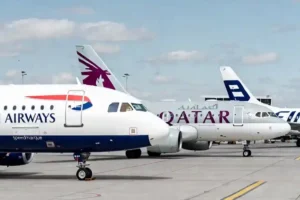
Each airline still runs its own frequent flyer programme, pricing model, cabin product and route network. The alliance does not erase those differences. Instead, it creates a shared operating layer across them. A Qatar Airways flight still feels like Qatar Airways. A Qantas flight still feels like Qantas. What the alliance ensures is that your status, your baggage and your itinerary work seamlessly across both.
This also extends to ground operations. oneworld operates Global Support Counters at major connecting airports, staffed by connection specialists who monitor tight transfers, assist with rebooking and can fast-track passengers through immigration and security when connections are at risk.
Think of oneworld as connective tissue. It links separate airlines into a network that behaves predictably across borders and carriers, without requiring them to become the same airline.
How the Network Actually Works
oneworld is built around a series of global hubs. Instead of one airline trying to cover the world alone, each member focuses on its strongest regions, then connects into the wider alliance network through its hub airport.
For UK travellers, London Heathrow acts as the primary anchor through British Airways. From there, secondary hubs such as Madrid (Iberia), Doha (Qatar Airways), Helsinki (Finnair) and Hong Kong (Cathay Pacific) extend reach into Europe, Asia, the Middle East, Africa and Australasia.
This structure is deliberate. It allows journeys to be built through different gateways depending on availability, routing and destination, rather than relying on one airline’s direct timetable alone.
Hub Logic
London connects the UK into the alliance. Madrid, Doha, Helsinki, Hong Kong, Tokyo, Sydney, Dallas/Fort Worth and Kuala Lumpur all function as secondary gateways that expand routing options across long-haul markets.
The practical result is flexibility. If a direct BA route is limited, unavailable or poorly priced, the alliance network often provides workable alternatives through partner hubs without leaving the ecosystem. A journey from London to Auckland could route through Doha on Qatar, through Hong Kong on Cathay Pacific, or through Sydney on Qantas — all within oneworld, all recognising your status and earning your points.
This is why experienced travellers rarely think in terms of a single airline. They think in terms of network flow — which hub provides the cleanest route, the most reliable connection, or the strongest onward coverage.
oneworld works best when viewed as a network of hubs rather than a collection of airlines. The power sits in how those hubs connect, not in any single carrier’s timetable.
The Full Member List
oneworld currently has 15 full member airlines. Hawaiian Airlines is expected to become the 16th when it formally joins on 22 April 2026, following its acquisition by existing member Alaska Airlines.
British Airways — Hub: London Heathrow. UK anchor and primary Avios entry point. Strong long-haul network and broad coverage across more than 200 destinations in over 65 countries.
Qatar Airways — Hub: Doha. Extensive long-haul reach into Asia, Africa, Australasia and the Indian subcontinent. Premium product leader.
Iberia — Hub: Madrid. Strong Europe and Latin America coverage. Avios programme partner — free transfers with BA.
Finnair — Hub: Helsinki. Efficient routing into Northern Europe and Asia via the polar shortcut to Japan, Korea and beyond.
American Airlines — Hubs: Dallas/Fort Worth, Miami, Chicago, more. The largest US domestic network, feeding transatlantic routes.
Japan Airlines — Hubs: Tokyo Haneda/Narita, Osaka. Comprehensive Japanese domestic and Asia-Pacific network.
Cathay Pacific — Hub: Hong Kong. Key Asia-Pacific connector with premium lounges and strong regional coverage.
Qantas — Hubs: Sydney, Melbourne. Australia’s flag carrier and founding oneworld member. Strong Australasia-Pacific reach.
Alaska Airlines — Hubs: Seattle, Portland, Los Angeles. US West Coast specialist. Atmos Rewards loyalty programme.
Malaysia Airlines — Hub: Kuala Lumpur. Southeast Asia coverage and connections into the wider Asia-Pacific network.
Royal Jordanian — Hub: Amman. Middle East and North Africa gateway. Notable for accessible status match offers.
SriLankan Airlines — Hub: Colombo. South Asia and Indian Ocean routing, connecting into wider alliance hubs.
Royal Air Maroc — Hub: Casablanca. North and West Africa gateway — the alliance’s primary African coverage.
Fiji Airways — Hub: Nadi. South Pacific specialist. Became a full oneworld member on 1 April 2025, having previously been a oneworld Connect partner since 2018.
Oman Air — Hub: Muscat. Middle East and Indian subcontinent coverage. Joined as a full member on 30 June 2025.
S7 Airlines (Russia) has had its membership suspended since April 2022. Starlux Airlines (Taiwan) has publicly expressed interest in applying for membership. Hawaiian Airlines, now part of the Alaska Air Group, is expected to join on 22 April 2026, which would bring the alliance to 16 active members.
Aer Lingus is not a oneworld member, but it sits within the same parent company (IAG) as British Airways and Iberia. It maintains partnership agreements with BA, Iberia, and American Airlines, so you can still earn Avios and Tier Points on many Aer Lingus flights. It functions as a practical extension of the network for UK travellers even without formal alliance membership.
Key Airlines for UK Travellers
While all 15 members contribute to the network, a handful shape most journeys for UK-based travellers. These carriers form the practical backbone of routes, connections and long-haul coverage from a London starting point.
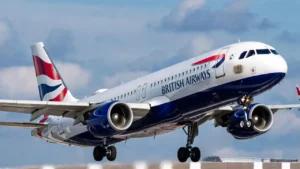
British Airways is the UK anchor — your primary Avios entry point, the airline most likely to appear on your booking, and the programme through which most UK travellers earn oneworld status. Strong Heathrow connectivity and a network of more than 200 destinations make it the natural default.
Qatar Airways is arguably the most important alliance partner for UK long-haul travel. Its Doha hub provides extensive reach into Asia, Africa, Australasia, and the Indian subcontinent, often with competitive award availability and a consistently strong premium product. Qatar also operates an Avios-based programme, meaning free transfers between BA and Qatar Avios balances.
Iberia complements BA through its Madrid hub, with particular strength on European routes and transatlantic services to Latin America. As another Avios programme, it shares the same currency — making it a natural extension of your BA earning and spending.
Finnair offers efficient routing into Asia via Helsinki, taking advantage of the polar shortcut that can significantly reduce flying time to Japan, South Korea, and destinations across East and Southeast Asia.
American Airlines provides the broadest US domestic network in the alliance, feeding transatlantic routes and giving UK travellers onward access to hundreds of domestic US destinations from major gateways.
Japan Airlines and Cathay Pacific are the key Asia-Pacific partners. JAL anchors Japan and connects into wider Asian routing, while Cathay Pacific’s Hong Kong hub provides regional connectivity and some of the best premium lounges in the world.
Don’t think in airline names — think in hubs. London, Doha, Madrid, Helsinki, Hong Kong and Tokyo often determine what journeys are possible more than the airline logo on the aircraft. When direct BA routes are limited, the question becomes: which hub gives the cleanest connection?
Status Across the Alliance
oneworld uses a three-tier alliance structure: Ruby, Sapphire and Emerald. These tiers sit above individual airline programmes and determine how status is recognised across partner carriers.
Status is earned within your chosen programme — for UK travellers, typically the British Airways Club — but recognition extends across the entire alliance when you fly eligible routes on any member airline.
How BA Club Status Maps to oneworld
Bronze → oneworld Ruby. Business class priority check-in, priority boarding, preferred seating from 7 days before departure, priority waitlist and standby positioning.
Silver → oneworld Sapphire. All Ruby benefits plus: business class lounge access (regardless of cabin), priority baggage handling, extra checked baggage allowance, seat selection at time of booking.
Gold → oneworld Emerald. All Sapphire benefits plus: first class lounge access (where available), first class check-in, fast-track security at select airports, higher additional baggage allowance.
This three-tier structure is unique to oneworld among the major alliances. Star Alliance and SkyTeam each have only two tiers, which means oneworld’s top-level Emerald status provides benefits — particularly first class lounge access — that have no direct equivalent in competing alliances.
Alliance status is portable. You earn it once in your home programme, then experience its benefits across multiple airlines and routes. A BA Silver holder walking into a Cathay Pacific business lounge in Hong Kong, a Qatar Airways lounge in Doha, or a Qantas lounge in Sydney receives the same recognition — no separate programme needed.
The Lounge Access Difference
Lounge access is one of the most tangible benefits of alliance status. At Sapphire (BA Silver), you gain access to business class lounges across the entire oneworld network — more than 600 lounges worldwide — regardless of which cabin you’re flying. This means even economy travellers with Sapphire status can use these lounges on eligible flights.
At Emerald (BA Gold), access extends to first class lounges where they exist. This includes some of the world’s best airport lounges: the Cathay Pacific First Class Lounge in Hong Kong, the Japan Airlines First Class Lounge in Tokyo, the Qantas First Class Lounge in Sydney and Los Angeles, and the British Airways Galleries First lounge at Heathrow Terminal 5.
Both Sapphire and Emerald status holders can bring one guest into the lounge, provided that guest is also travelling on a oneworld flight.
Always ensure your frequent flyer number is correctly attached to every booking, including those on partner airlines. Alliance recognition only works when flights are credited to the programme where you hold status. This is particularly easy to forget when booking through third parties or codeshare itineraries.
Marketing vs Operating Carrier
One of the most misunderstood aspects of alliance travel is the difference between the marketing carrier and the operating carrier. This distinction determines which airline’s flight number appears on your ticket versus which airline physically operates the aircraft.
A flight sold as BA7295 might actually be operated by American Airlines. The BA flight number is the marketing code, while American Airlines operates the aircraft. This matters for several reasons: lounge access, status benefits, earning rates and the onboard experience are generally determined by the operating carrier, not the marketing code.
For oneworld status benefits and lounge access, the general rule is that your flight must be both marketed and operated by a oneworld member airline. Codeshare flights where a non-oneworld carrier operates the aircraft typically do not qualify for alliance benefits, even if the marketing carrier is a oneworld member.
Before booking partner flights for status benefits or lounge access, check who actually operates the aircraft. A BA-marketed flight operated by a non-alliance carrier may not trigger your oneworld benefits. The operating carrier is what matters for recognition at the airport.
Why oneworld Matters in Practice
The alliance becomes valuable when trips extend beyond a single airline’s network. Instead of relying on one carrier’s routes, availability and timetable, you gain access to a broader system that can adapt around your destination, timing and routing.
For UK travellers, this often shows up in subtle ways. A connection via Madrid instead of London. A long-haul leg operated by Qatar Airways rather than BA. A return flight routed through Helsinki or Hong Kong. The alliance allows these journeys to function as one trip — with through-checked baggage, coordinated rebooking and consistent status recognition — rather than separate, disconnected bookings.
Operational Advantage
Partner airlines coordinate baggage handling, status recognition and itinerary management. Multi-carrier journeys behave more like a single system than a series of disconnected flights. If a connection is tight, the Global Support team can intervene. If a flight is cancelled, rebooking options extend across alliance partners rather than being limited to one airline’s inventory.
This structure also protects flexibility. If award availability shifts or a preferred routing becomes unavailable, a partner airline may provide an alternative route without leaving the ecosystem. The journey remains inside the same alliance, with recognition and coordination intact.
Network Effect
More hubs and more partner airlines increase the number of workable trip structures — particularly across North America, the Middle East, Asia-Pacific and, increasingly, into Africa and the South Pacific following the additions of Royal Air Maroc, Fiji Airways and Oman Air.
The practical outcome is optionality. You are not confined to one departure city, one airline’s timetable or one long-haul corridor. The alliance provides structural flexibility before any pricing or optimisation decisions are made.
oneworld’s value is not in any one airline. It comes from how the network, status recognition and shared currency combine to make global travel more workable from a UK starting point. The alliance expands what is realistically bookable by widening both routing options and partner availability.
Redemption Strength at Alliance Level
oneworld performs particularly well in long-haul markets and premium cabins. The combined networks of its member airlines create multiple pathways between major global cities, rather than relying on a single direct route.
This breadth matters most when availability tightens. If one carrier has limited award seats on a given route, the alliance structure increases the number of alternative routings that still remain within the same ecosystem. A London-to-Tokyo redemption could route directly on BA, via Doha on Qatar, via Helsinki on Finnair, or via Hong Kong on Cathay Pacific — each with different availability, surcharges and Avios pricing.
The Avios currency adds a further layer. Because Avios transfer freely between British Airways, Iberia, Aer Lingus, Qatar Airways and Vueling, you can book partner awards through whichever programme offers the best pricing for your route. Iberia often prices partner awards differently to BA. Qatar may release availability that BA does not show. The correct choice depends on the constraint you are solving: Avios balance, cash outlay, routing, time or cabin preference.
When planning long-haul redemptions, check award availability and pricing through multiple Avios programmes — not just BA. Iberia and Qatar in particular can show different availability windows and different surcharge levels for the same flights.
Round the World Tickets
oneworld offers Round the World fare products bookable directly through oneworld.com — the only major alliance to provide this as a self-service online booking. Star Alliance also sells Round the World tickets but requires working through an airline or agent; SkyTeam discontinued its RTW product.
The main products are the oneworld Explorer (continent-based pricing, bookable at oneworld.com) and Global Explorer (distance-based pricing, bookable through travel agents or airline reservations). Both itineraries can include between 3 and 16 flights, span up to six continents, and remain valid for trips of 10 days to 12 months. A transatlantic and transpacific flight must be included.
For UK travellers with flexible schedules, Round the World tickets can represent exceptional value — particularly if your itinerary naturally involves multiple long-haul sectors that would be expensive when priced individually.
How to Use the Alliance Deliberately
oneworld is not a feature added onto British Airways. It is the wider operating structure that allows Avios, status recognition and partner routing to function across global markets.
For UK travellers, the alliance provides four structural advantages:
Broader route coverage — access to over 900 destinations versus BA’s own network of more than 200.
Portable status recognition — earn once through the BA Club, benefit everywhere across 15 (soon 16) airlines.
Multiple hub access — build itineraries through Doha, Madrid, Helsinki, Hong Kong, Tokyo, Sydney and beyond, rather than routing everything through London.
Shared currency flexibility — use Avios across five interconnected programmes, choosing whichever offers the best deal on a given route.
The alliance matters because it widens what is realistically possible — before any pricing or optimisation decisions are made. Once that structure is understood, the next step is learning how to use it intentionally: redeeming across partners, routing through secondary hubs, and aligning status with a home programme that matches your travel patterns.
Think of oneworld as the foundation layer. Every strategy — redemptions, status earning, routing optimisation — operates on top of this network. Understanding the alliance structure is what makes the more advanced strategies work.
Read next → How the British Airways Club Actually Works
Read next → Partner vs Own-Programme Awards